Views: 0 Author: Site Editor Publish Time: 2026-09-14 Origin: Site
Choosing the wrong sludge dewatering system can increase energy, polymer, maintenance, and disposal costs.Screw presses and centrifuges differ in capacity, cake dryness, energy use, and maintenance requirements.
In this article, you will learn their key differences and how to choose the right system for your wastewater treatment facility.
Volume vs. Efficiency: Centrifuges dominate in high-throughput applications and extreme flow rates, achieving superior cake dryness (often 20-22%+), but require significant energy and maintenance overhead.
Energy Reduction: Screw presses operate at low RPMs, offering up to 10x lower energy consumption and minimal operator intervention, making them ideal for small-to-medium facilities prioritizing low OPEX.
TOTEX Dependency: Total Cost of Ownership hinges on local sludge disposal costs; high hauling fees often justify the energy-intensive centrifuge, while low hauling fees favor the energy-efficient screw press.
Environmental Impact: Noise, vibration, and post-dewatering odor profiles strongly favor screw press technology, particularly in enclosed, urban, or strictly regulated facilities.
Table of Contents
Calculating daily sludge volume establishes your primary baseline. You must determine peak flow capacity and expected variations in influent loading. This dictates your scalability needs. Under-sizing equipment leads to processing backlogs and overflowing holding tanks. Over-sizing wastes capital and increases idle running time. A properly sized Sludge Dewatering System matches your specific daily solids production while leaving room for seasonal flow spikes. To establish an accurate baseline, follow these specific steps:
Measure your average daily influent flow over a 12-month period to account for seasonal variations.
Calculate the total suspended solids (TSS) loading entering the plant headworks.
Determine the biological yield generated from your secondary aeration basins.
Factor in the volume of waste activated sludge (WAS) wasted daily to maintain your target mean cell residence time (MCRT).
Calculate the peak wet weather flow multiplier to ensure the dewatering equipment can handle storm surge conditions.
Evaluating influent thickness determines your pre-treatment requirements. Primary sludge behaves differently than dilute WAS. You must determine if the system will process high-solid content thickened sludge. Some setups require integrated pre-thickening drums or gravity belt thickeners. Pumping thin sludge directly into dewatering equipment drastically reduces efficiency. It increases polymer consumption, yields wetter cake, and forces the machine to process excess water instead of solids.
Establishing the required dry solids percentage drives the technology choice. Local disposal methods dictate this target. Landfills often require a minimum dryness threshold, usually verified by a paint filter test, to accept waste. Land application programs have different consistency requirements based on the spreading equipment used. Incineration demands the driest possible cake to maintain combustion efficiency and prevent the need for supplemental fuel. Weight-based hauling fees penalize wet sludge. You pay heavily to transport water down the highway.
Assessing available electrical infrastructure prevents costly facility upgrades. High-draw equipment requires robust motor control centers and variable frequency drives (VFDs). You must evaluate your long-term energy budgets. Utility rates fluctuate based on peak demand and time-of-use charges. Heavy machinery pulling continuous high amperage strains older electrical grids. Upgrading plant electrical panels, running new conduit, and installing larger breakers adds massive hidden costs to installation projects.
Evaluating operator availability impacts your technology selection. Some machines run autonomously for hours with minimal oversight. Others require constant monitoring and adjustment to maintain optimal performance. You must assess your in-house mechanical expertise. Determine your tolerance for complex, specialized maintenance tasks. Relying on external factory technicians increases downtime and maintenance budgets. Systems requiring specialized lifting equipment complicate routine maintenance schedules and force you to hire outside rigging contractors.
Measuring available plant footprint prevents installation bottlenecks. You must account for vertical clearance. Lifting hoists need overhead space to remove heavy components during rebuilds. Structural floor load capacities dictate equipment placement. Heavy, vibrating machinery requires reinforced concrete foundations and structural steel supports. Compact, skid-mounted systems offer flexibility in tight spaces. Retrofitting older buildings often restricts your equipment choices based purely on physical dimensions and doorway widths.
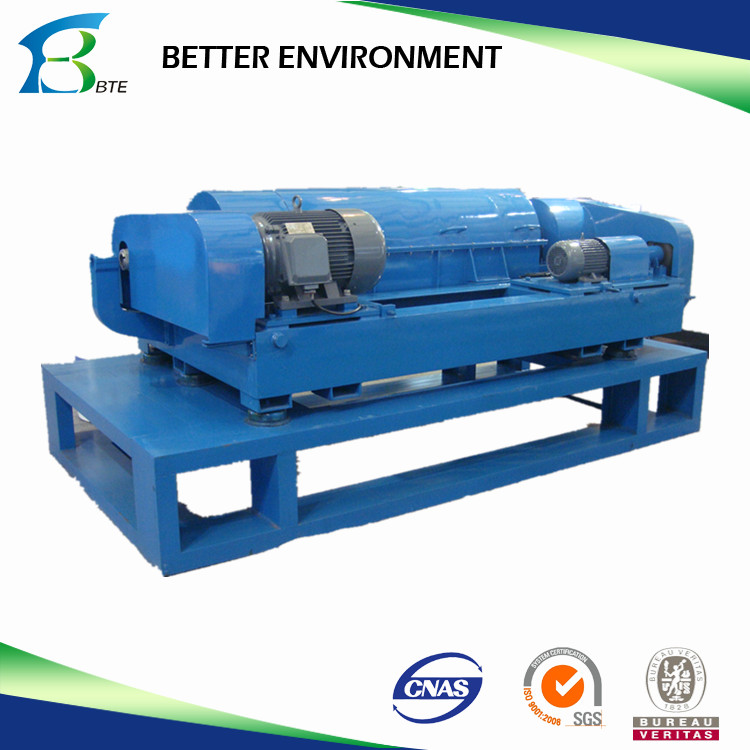
This technology utilizes a high-speed rotating bowl and an internal scroll conveyor. It applies extreme G-forces to the incoming sludge, often exceeding 3,000 Gs. These forces separate solid particles from liquids based on density. The heavier solids pack tightly against the inner bowl wall. The scroll conveyor rotates at a slightly different speed than the bowl, creating a differential speed. It scrapes the compacted solids up a conical beach toward the discharge ports. The clarified liquid, or centrate, flows over adjustable weir plates at the opposite end. This high-shear environment demands precise polymer dosing to keep flocs intact under extreme turbulence.
Large-scale municipal wastewater treatment plants rely heavily on this technology. Heavy industrial processing facilities use it for rapid, continuous separation. It excels in applications requiring maximum volume reduction. It handles massive flow rates with ease. Facilities processing millions of gallons daily depend on its high throughput capacity. It processes thick, abrasive sludges containing grit that would quickly destroy other systems. The continuous, high-speed operation suits plants running 24/7 schedules with dedicated operator shifts.
This system relies on a slow-moving auger housed within a cylindrical screen. Modern designs use a self-cleaning ring assembly instead of a static wedge-wire screen. Fixed and moving rings alternate along the auger shaft. The auger pitch decreases, and the shaft diameter increases as sludge moves toward the discharge plate. This action gradually increases pressure, squeezing water from the flocculated sludge. The moving rings continuously clean the gaps between the fixed rings. This prevents blinding and maintains consistent filtrate drainage. The process operates at very low rotational speeds, typically under 5 RPM.
Food and beverage processing plants frequently deploy this technology. Decentralized or small-to-medium municipal plants benefit from its mechanical simplicity. Facilities with strict noise, vibration, or footprint limits favor it heavily. It handles oily or fatty sludges that instantly blind traditional filter presses. The gentle squeezing action preserves fragile biological flocs. This makes it highly effective for secondary WAS. Enclosed urban facilities use it to minimize neighborhood complaints regarding noise and foul odors.
Choosing between a screw press vs centrifuge requires analyzing final cake metrics. High-G separation consistently achieves higher dry solids concentrations. You typically see 20-25% dry solids depending on the sludge type and polymer conditioning. This extreme compaction squeezes out interstitial water trapped between cells. It significantly reduces the final weight and volume of hauled sludge. High solids capture rates, often exceeding 95%, mean cleaner centrate returning to the head of the plant. This prevents biological overloading and nutrient recycling in your aeration basins.
Slow-moving auger systems typically yield a lower dry solids percentage. They often discharge at 15-18% on standard municipal WAS. However, advancements in flocculation tanks and pneumatic backpressure plates are closing this gap. Specific sludge types, particularly fibrous primary sludges, dewater exceptionally well in these units. The solids capture rate remains high due to the gentle filtration process. You trade a few percentage points of ultimate dryness for massive gains in operational simplicity and energy reduction.
High-speed rotational equipment requires massive continuous kilowatt draw. Main drive motors often range from 50 to over 150 horsepower. These motors must overcome significant inertia to reach operating speeds. This makes the system highly sensitive to fluctuating energy prices. Peak-demand utility charges can severely impact your operating budget if you run the machine during high-rate hours. The main drive and back drive motors consume substantial power continuously. You must factor these heavy electrical costs into your long-term financial models.
Low-speed systems operate at fractional RPMs. This results in a dramatic reduction in power consumption. You often see 80-90% less power draw than a comparably sized high-speed unit. Drive motors typically range from 2 to 5 horsepower. This equates to up to 10x lower energy usage overall. Small drive motors require standard electrical connections and smaller VFDs. They do not trigger peak demand penalties on your utility bill. This energy efficiency stabilizes operating budgets against volatile utility markets.
High-speed separation involves complex, expensive rebuilds. The scroll conveyor experiences severe abrasion from grit and sand. It requires periodic hard-surfacing with tungsten carbide to maintain tight tolerances. The rotating assembly demands precise dynamic balancing. Imbalance causes catastrophic vibration that can destroy main bearings. These rebuilds usually require shipping the rotating assembly to a factory service center. You need specialized lifting equipment to remove the heavy bowl. This results in significant planned downtime. You must keep spare rotating assemblies on hand or arrange for liquid sludge hauling during overhauls.
Low-friction, slow-moving parts result in longer lifespans for wear components. The auger and rings experience minimal abrasion because they rotate so slowly. Routine maintenance typically involves replacing the auger edge wipers or swapping out worn spacing rings. Plant staff can perform these tasks on-site with standard hand tools. You do not need heavy cranes, dynamic balancing equipment, or factory technicians. This autonomy reduces reliance on expensive external service contracts. It keeps maintenance schedules predictable and manageable for small maintenance crews.
Wash water requirements differ significantly between the two technologies. Slow-moving systems rely on automated, intermittent wash-water cycles. These short bursts, lasting only seconds, prevent screen blinding without consuming massive volumes of plant water. High-speed systems require less continuous wash water during actual operation. However, they demand intensive Clean-In-Place (CIP) protocols during shutdowns. Flushing the bowl thoroughly prevents dried sludge from throwing the machine out of balance upon the next restart.
Technical Parameter | Decanter Centrifuge | Dewatering Screw Press |
|---|---|---|
Typical Cake Dryness | 20% - 25%+ | 15% - 18% |
Main Drive Motor Size | 50 - 150+ HP | 2 - 5 HP |
Operating Speed | 2,000 - 4,000 RPM | 1 - 5 RPM |
Major Rebuild Interval | 10,000 - 15,000 Hours | 30,000+ Hours |
Maintenance Execution | Factory service center required | On-site by plant personnel |
Vibration Levels | High (Requires isolation pads) | Near zero |
High-speed operation generates significant noise and vibration. You must install heavy structural foundations to absorb the kinetic energy. Vibration isolation pads are mandatory to prevent structural damage to the building. Acoustic enclosures help mitigate the deafening noise levels, but operators still require hearing protection. The high-shear action violently agitates the sludge, releasing trapped hydrogen sulfide and volatile organic compounds. This results in a highly odorous post-dewatering sludge cake. You must install robust HVAC and chemical odor scrubbing systems in the dewatering room to protect operators and prevent neighborhood complaints.
Slow-moving systems feature a highly compact, skid-mounted footprint. They operate quietly with near-zero vibration. You can hold a normal conversation right next to the machine while it runs at full capacity. The low-shear, enclosed processing minimizes the release of volatile compounds. This drastically reduces ambient and post-dewatering odors. You save money on structural reinforcements, acoustic paneling, and complex air handling infrastructure. The compact design allows for easy retrofitting into existing, cramped buildings without knocking down walls or reinforcing floors.
Centrifuges generally have higher purchase and installation costs because they use high-speed rotating components and may require reinforced foundations, vibration control, and upgraded electrical systems.
Screw presses have a simpler, low-speed design and are often supplied as skid-mounted units. This usually makes installation easier and less expensive.
Centrifuges offer high throughput and may produce drier sludge cake, reducing transportation and disposal costs. However, they generally consume more energy and require specialized maintenance.
Screw presses use less electricity and are easier to maintain, but their cake dryness depends on sludge characteristics and operating conditions. Compare electricity, polymer, maintenance, labor, and disposal costs over the equipment’s full service life.
Changes in sludge concentration and composition can reduce cake dryness and increase polymer consumption.
Solution: Use an equalization tank, effective mixing, and automatic polymer dosing to stabilize the feed.
Centrifuges may experience bearing or vibration problems, while screw presses can suffer from screen blockage and worn components.
Solution: Follow a preventive maintenance schedule and keep essential spare parts on-site.
The wrong polymer or dosage can reduce solids capture and increase operating costs.
Solution: Conduct jar tests or pilot testing with actual sludge before selecting the polymer and finalizing the equipment configuration.
Conduct a site-specific pilot test using actual plant sludge to verify polymer consumption and achievable cake dryness.
Model a 10-year Total Expenditure calculation based on local utility rates, chemical costs, and specific landfill tipping fees.
Consult with an application engineer to verify volumetric sizing against your facility's peak flow requirements.
Evaluate existing floor load capacities and electrical infrastructure before selecting high-vibration, high-draw equipment.
Perform bench-scale jar testing to identify the exact polymer chain structure required for your specific biological sludge.
A: With proper maintenance, the main structural components last 15 to 20 years. However, the rotating assembly, specifically the scroll conveyor, requires hard-surfacing and dynamic balancing every 10,000 to 15,000 operating hours depending on sludge abrasiveness.
A: Yes. They handle primary sludge well, especially when equipped with heavy-duty augers. Primary sludge often dewaters easier than secondary biological sludge, yielding higher cake dryness and requiring lower polymer doses.
A: They consume very little wash water. They use automated, intermittent spray cycles lasting only a few seconds every few minutes. This uses a fraction of the water required by belt filter presses or centrifuge CIP cycles.
A: The extreme G-forces and high-shear environment break open bacterial cells and violently agitate the sludge. This action releases trapped volatile organic compounds and hydrogen sulfide gases into the surrounding air and the discharged cake.
A: While modern units feature automated controls, they still require frequent operator oversight. Operators must monitor vibration levels, adjust differential speeds, and manage polymer dosing to maintain optimal cake dryness and prevent torque overloads.
A: Blinding occurs when sticky sludge or improper polymer dosing clogs the gaps between the rings. Failing to maintain the automated wash-water system or operating with worn moving rings also prevents proper self-cleaning, leading to poor filtrate drainage.