Views: 0 Author: Site Editor Publish Time: 2026-07-14 Origin: Site
Municipal and industrial facilities face escalating pressure to meet stricter environmental discharge limits while managing aging infrastructure, rising energy costs, and climate-induced hydraulic variability. Balancing the capital expenditure of facility upgrades with the operational expenditure of daily compliance, capacity scaling, resource recovery, and asset protection requires a rigorous engineering approach. This technical breakdown of the wastewater treatment process is designed to help engineers, facility managers, and municipal planners evaluate technology options, assess system trade-offs, and make evidence-based procurement decisions. We will examine the specific mechanical and biological stages required to transform raw influent into compliant effluent, focusing on operational realities rather than theoretical models.
Compliance Drives Design: System architecture must be reverse-engineered from local effluent standards (e.g., NPDES permits), specifically targeting nutrient removal, emerging contaminants, and potential water reclamation.
Stage-Specific Trade-offs: Each phase of wastewater treatment—from preliminary screening to advanced tertiary filtration—requires balancing physical footprint, chemical inputs, energy consumption (especially in aeration), and maintenance overhead.
Sludge as an Asset: Modern facilities are shifting from viewing sludge management as a disposal cost to evaluating anaerobic digestion and dewatering as viable ROI drivers through biogas energy recovery.
Automation and Scalability: Upgrading legacy systems requires evaluating SCADA integration, smart sensor arrays, and modular technologies (like MBRs) to handle population growth or production increases without proportional staffing increases.
Table of Contents
Establishing baseline requirements for Biological Oxygen Demand (BOD), Total Suspended Solids (TSS), Nitrogen, Phosphorus, and pathogen reduction dictates the entire facility layout. Regulatory compliance is not a static target. Discharge permits are becoming increasingly stringent, forcing plants to upgrade legacy infrastructure to handle nutrient removal and emerging contaminants. Engineers must design systems capable of meeting these limits consistently, regardless of seasonal temperature variations or sudden industrial shock loads.
Evaluating current baseline flows versus peak wet weather flows is a primary design parameter. Inflow and Infiltration (I&I) during heavy storm events can hydraulically overload a plant, washing out the biological biomass and causing permit violations. Facilities must project future industrial or municipal growth to size clarifiers, aeration basins, and pumping stations correctly. A system designed only for current dry-weather flows will fail during peak events.
Site constraints heavily influence technology selection. Assessing the footprint versus efficiency trade-off is necessary when land expansion is unfeasible. High-density biological processes, such as membrane bioreactors or moving bed biofilm reactors, allow facilities to double their treatment capacity within the existing physical footprint. This spatial efficiency often requires higher energy inputs, forcing a direct compromise between land availability and ongoing power consumption.
Safely conveying raw wastewater from municipal and industrial sources to the treatment plant without environmental release or structural degradation requires a robust network of gravity sewers and lift stations. Lift stations utilize submersible pumps and variable frequency drives (VFDs) to optimize pump cycles and manage force mains. These systems must handle variable hydraulic loads, ramping up during morning and evening flow peaks while conserving energy during low-flow nighttime hours.
Establishing baseline flow rates and influent characterization before the water enters treatment prevents downstream process failures. Influent flow metering, typically using magnetic or ultrasonic flow meters, provides the data necessary to pace chemical dosing and aeration rates. Automated composite samplers pull regular aliquots to measure BOD, Chemical Oxygen Demand (COD), and TSS. This data allows operators to adjust the wastewater treatment parameters proactively rather than reacting to effluent violations.
Controlling odors and managing peak wet-weather surges mitigate severe operational risks. Hydrogen sulfide gas generated in anaerobic sewer conditions causes severe microbial induced concrete corrosion (MICC) and presents a lethal hazard to operators. Chemical injection systems dosing calcium nitrate or iron salts into the collection system prevent sulfide formation. Equalization basins at the headworks absorb hydraulic surges, feeding the influent into the plant at a controlled rate to prevent the washout of secondary clarifiers.
The removal of large debris, rags, and heavy inorganic solids prevents mechanical damage and pipe clogging in subsequent stages. Preliminary treatment is the physical shield for the entire plant. When this stage fails, pumps clog, aerators foul, and clarifier mechanisms break.
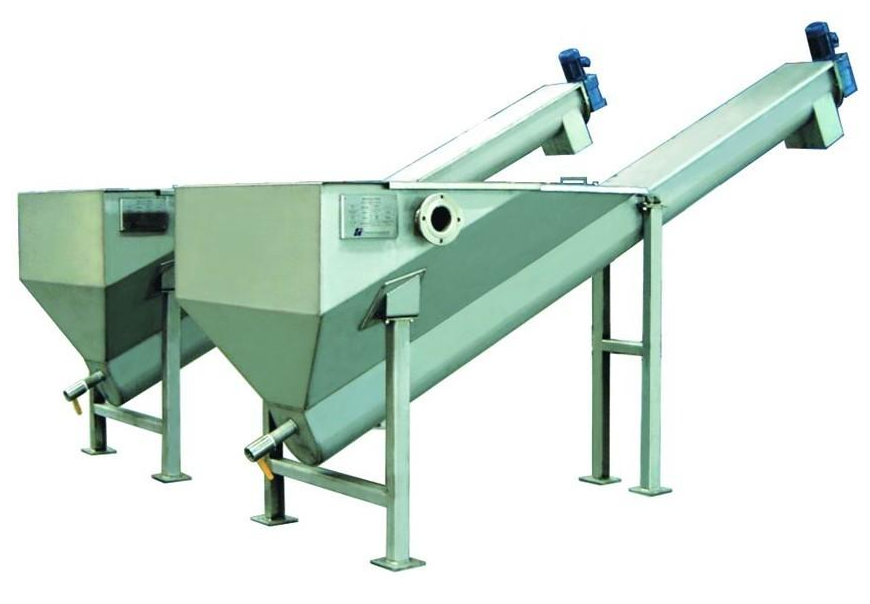
Screening technologies vary based on the required capture rate and downstream equipment sensitivity. Coarse bar screens handle large debris, while fine screens capture plastics and fibrous materials. Automated screenings washing and compacting systems reduce the volume and odor of the captured material before landfill disposal.
Screen Type | Typical Spacing | Primary Function | Operational Impact |
|---|---|---|---|
Coarse Bar Screens | 12mm - 50mm | Remove large branches, rocks, and heavy trash. | Protects headworks pumps from catastrophic jamming. |
Fine Screens | 3mm - 6mm | Capture rags, plastics, and fibrous materials. | Prevents ragging on pump impellers and aeration diffusers. |
Micro Screens | 1mm - 2mm | High-capture of fine particulates and hair. | Mandatory for protecting membrane bioreactor (MBR) systems. |
Grit removal targets inorganic sands, gravel, and coffee grounds that cause severe abrasion to pump volutes and accumulate in anaerobic digesters, reducing their active volume. Aerated grit chambers use a spiral roll pattern to keep lighter organic solids in suspension while heavy grit settles. Vortex grit systems utilize centrifugal force to separate the grit. Assessing the reliability of automated raking mechanisms and the impact of bypass events during extreme weather dictates the long-term maintenance overhead of the headworks.
The gravity-based reduction of suspended solids and organic loading prior to biological treatment occurs in primary clarifiers. These large basins slow the water velocity, allowing heavier organic solids to settle to the bottom as primary sludge. Circular clarifiers use rotating scraper arms to push sludge to a central hopper, while rectangular configurations use chain-and-flight mechanisms. Engineers evaluate surface overflow rates (SOR) and hydraulic retention times (HRT) to ensure optimal settling velocities.
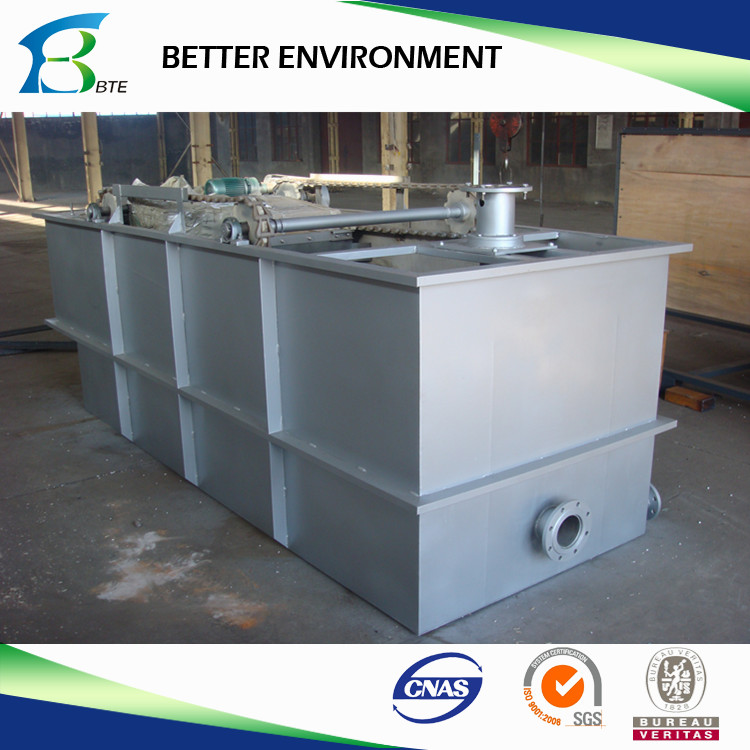
Skimming mechanisms isolate floating materials, including scum, fats, oils, and grease (FOG). If FOG passes into the secondary treatment phase, it coats biological floc, hindering oxygen transfer and causing severe foaming issues in aeration basins. Surface skimmers push this floating layer into a trough for separate processing or disposal.
Chemically Enhanced Primary Treatment (CEPT) utilizes coagulants like ferric chloride or aluminum sulfate, along with anionic polymers, to accelerate settling. CEPT is highly effective during wet weather events to handle increased flows without expanding clarifier capacity. Effective primary treatment removes 50-70% of TSS and 25-40% of BOD. This physical removal directly lowers the organic load entering the secondary phase, significantly reducing the electrical power required for aeration blowers.
The biological consumption of dissolved and suspended organic matter relies on specialized, controlled microbial populations. This stage converts soluble BOD into cellular biomass, which is then separated from the clean water. Conventional Activated Sludge (CAS) remains the industry standard. It is highly reliable but requires a large physical footprint and continuous, energy-intensive aeration to maintain dissolved oxygen levels for the bacteria.
Membrane Bioreactors (MBR) combine biological treatment with microfiltration or ultrafiltration membranes. Instead of relying on gravity settling in a secondary clarifier, MBRs pull the mixed liquor through physical membranes. This yields superior effluent quality and allows the system to operate at much higher mixed liquor suspended solids (MLSS) concentrations, drastically reducing the required footprint. However, MBRs carry high capital costs, require intensive membrane cleaning protocols, and necessitate periodic membrane replacement.
Moving Bed Biofilm Reactors (MBBR) and Integrated Fixed-Film Activated Sludge (IFAS) systems introduce plastic media carriers into the aeration basins. These carriers provide a protected surface area for biofilm growth. Fixed-film systems offer high process stability, resistance to toxic shock loads, and lower energy demands compared to suspended growth systems.
Implementing Biological Nutrient Removal (BNR) requires specific process layouts to target nitrogen and phosphorus.
Anaerobic Zones: Positioned upfront without oxygen or nitrates to stress phosphorus-accumulating organisms (PAOs), forcing them to release phosphorus so they uptake it in excess later.
Anoxic Zones: Devoid of free oxygen but containing nitrates. Bacteria strip the oxygen from the nitrate molecules, releasing harmless nitrogen gas into the atmosphere (denitrification).
Aerobic Zones: Highly aerated basins where nitrifying bacteria convert ammonia into nitrites and then nitrates (nitrification), while PAOs consume large amounts of phosphorus.
Internal Mixed Liquor Return (IMLR): Pumps nitrate-rich water from the aerobic zone back to the anoxic zone to sustain the denitrification process.
Biological systems are highly sensitive to toxic industrial chemical dumps, heavy metals, and extreme pH shifts. Robust upstream monitoring and real-time dissolved oxygen (DO) control using optical sensors and variable speed blowers are mandatory to maintain process health and optimize energy consumption.
Achieving stringent environmental discharge standards or preparing water for direct and indirect potable reuse requires advanced tertiary treatment. Polishing filters remove the fine suspended solids that escape secondary clarifiers. Continuous backwash upflow sand filters, disk filters, and cloth media filters provide a physical barrier, dropping effluent TSS to near-zero levels. This step is critical because suspended solids can shield pathogens during the final disinfection phase.
Chemical phosphorus precipitation utilizes multi-point chemical dosing systems to achieve strict phosphorus limits, often below 0.1 mg/L. Metal salts bind with the remaining soluble phosphorus, creating a chemical floc that is filtered out. Membrane desalination, including Reverse Osmosis (RO) and Nanofiltration, provides high-purity water suitable for industrial boiler feed, cooling towers, and aquifer recharge.
Designing systems for "purple pipe" reclaimed water networks creates secondary revenue streams for municipalities. Reclaimed water is sold for agricultural irrigation, golf course maintenance, and industrial cooling. These decisions are driven strictly by local watershed protections, total maximum daily load (TMDL) restrictions, and corporate zero-liquid-discharge (ZLD) initiatives.
The inactivation of pathogenic microorganisms, including bacteria, viruses, and parasites, must occur before environmental discharge. Chlorination using sodium hypochlorite is common due to its low capital cost. However, it carries high operational costs for chemical delivery and requires a subsequent dechlorination step using sodium bisulfite to prevent toxic chlorine residuals from entering receiving streams. Chemical storage also presents significant safety and compliance risks.
Ultraviolet (UV) disinfection eliminates chemical handling risks entirely. Banks of low-pressure, high-output lamps irradiate the water, destroying the DNA of pathogens. UV requires high capital investment and moderate operational costs for lamp replacement and power. It also demands high UV transmittance (UVT) in the water; if the upstream effluent is cloudy, the UV light cannot penetrate, and disinfection fails.
Ozonation is highly effective for complex contaminants and emerging pollutants, such as microplastics, endocrine disruptors, and pharmaceuticals. Ozone gas is generated on-site and bubbled through the effluent. While extremely powerful, it is capital and energy-intensive. Selecting a disinfection method requires auditing the facility's safety footprint, power reliability, and the specific sensitivity of the receiving aquatic ecosystem.
The stabilization, volume reduction, and safe disposal of solid byproducts generated during treatment dictate a massive portion of a facility's operating budget. Sludge management begins with thickening. Gravity belt thickeners, rotary drum thickeners, or dissolved air flotation (DAF) units remove excess water, increasing the solids concentration from roughly 1% to 5-7%. This volume reduction is critical before pumping the sludge into digesters.
Stabilization reduces pathogens and volatile organic matter. Aerobic digestion pumps air into the sludge, allowing bacteria to consume the remaining organics. It has lower capital costs but high energy demands. Anaerobic digestion occurs in large, heated, oxygen-free tanks. It requires high upfront capital but produces Class A or B biosolids and generates methane-rich biogas.
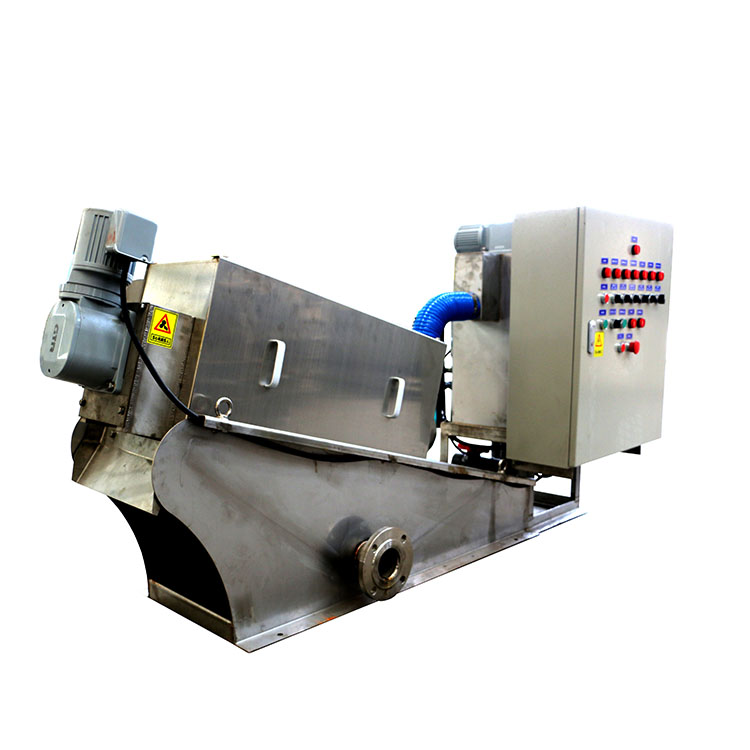
Dewatering follows digestion to maximize solids concentration and reduce hauling weights. Centrifuges, belt filter presses, and screw presses, aided by polymer addition, squeeze the remaining water out, producing a semi-solid cake. Evaluating Combined Heat and Power (CHP) systems to run plant processes using digester-produced methane turns a waste stream into an energy asset, offsetting grid power consumption and providing heat for the digesters.
Centralizing control optimizes energy use, chemical dosing, and compliance reporting. Supervisory Control and Data Acquisition (SCADA) systems pull data from field instruments to programmable logic controllers (PLCs). Evaluating open-architecture versus proprietary control systems determines how easily a facility can integrate new equipment in the future.
Implementing smart sensor arrays allows for feed-forward and feed-back control loops. Ammonia-based aeration control (ABAC) uses real-time ammonia sensors to adjust blower speeds, providing exactly the amount of air needed for nitrification without wasting power. Modular technologies and advanced automation handle population growth and production increases without requiring proportional staffing increases, ensuring the facility remains resilient.
Audit current hydraulic loading and project 10-year capacity needs to identify potential wet-weather bottlenecks before they cause permit violations.
Implement automated dissolved oxygen and ammonia pacing controls in aeration basins to immediately reduce electrical consumption.
Upgrade preliminary screening to fine or micro-screens to protect downstream mechanical assets and extend the lifespan of aeration diffusers.
Transition sludge management strategies to incorporate anaerobic digestion and Combined Heat and Power (CHP) systems, converting waste into usable facility energy.
To seamlessly implement these advanced process upgrades and optimize resource recovery, selecting high-performance machinery is paramount. Shandong Better Environmental Protection Technology is a leading environmental equipment manufacturer specializing in the R&D and fabrication of robust, highly automated wastewater treatment solutions. The company provides cutting-edge hardware—including specialized Dissolved Air Flotation (DAF) units, advanced mechanical screens, and fully integrated containerized MBR systems—engineered to help municipal and industrial facilities globally maximize operational efficiency and consistently beat strict discharge limits.
A: Preliminary treatment removes large debris, rags, plastics, and heavy inorganic grit. This physical screening prevents mechanical damage, pipe clogging, and excessive wear on downstream pumps and clarifier mechanisms.
A: CEPT utilizes metal salts and polymers to accelerate the settling of suspended solids. This removes a higher percentage of TSS and BOD in the primary clarifiers, directly reducing the organic load and aeration energy required in the secondary biological phase.
A: MBRs replace traditional secondary clarifiers with physical microfiltration membranes. This allows the system to operate at much higher biomass concentrations, delivering superior effluent quality suitable for reuse while requiring a significantly smaller physical footprint.
A: Anaerobic digestion breaks down organic sludge in an oxygen-free environment, stabilizing the biosolids for safe disposal while generating methane-rich biogas. This biogas can be captured and used in CHP systems to generate electricity and heat for the plant.
A: The choice between chlorination, UV, or ozonation depends on the facility's safety constraints regarding chemical storage, available capital budget, power reliability, and the specific discharge limits required to protect the receiving aquatic ecosystem.