


Views: 0 Author: Site Editor Publish Time: 2026-08-10 Origin: Site


Paper mill wastewater is not one uniform waste stream. Water from the paper machine, pulping process, equipment cleaning, recycled paper preparation, and sludge handling can contain very different pollutants.
This matters because the right treatment method depends on what is actually in the water.
White water containing fibers, fines, and mineral fillers is mainly a solids-separation problem. Wastewater with high concentrations of dissolved starch, sugars, lignin compounds, or other organic matter usually requires biological treatment. In many mills, both problems occur at the same time.
A practical paper mill wastewater treatment system therefore uses several treatment stages rather than relying on a single piece of equipment.
A typical treatment process may include:
Screening → Equalization → Coagulation & Flocculation → Dissolved Air Flotation → Biological Treatment → Tertiary Treatment or Water Reuse
Dissolved air flotation (DAF) is particularly useful for separating fine fibers, fillers, suspended solids, and particulate COD. It can significantly reduce the solids load before wastewater reaches biological treatment.
However, DAF should not be expected to remove large amounts of dissolved COD by itself. When soluble organic matter remains in the water, aerobic or anaerobic biological treatment is usually required.
The key is to match each wastewater problem with the right treatment stage.
Table of Contents
Wastewater composition depends on the type of paper being produced, the raw material, the pulping process, the amount of recycled fiber used, and how much process water is being recirculated.
A recycled packaging paper mill, for example, may deal with large quantities of short fibers, starch, fillers, ash, and adhesives. A pulp mill may have a much higher dissolved organic load associated with lignin and pulping chemicals.
This is why wastewater should be evaluated by source rather than treated as a single, predictable stream.
Wastewater Source | Common Contaminants | Main Treatment Concern |
|---|---|---|
Paper machine white water | Fibers, fines, fillers, suspended solids | Fiber recovery and TSS removal |
Recycled paper processing | Short fibers, ash, starch, inks, adhesives | High and changing solids load |
Pulping wastewater | Dissolved organic matter, lignin compounds | COD and BOD |
Machine and floor washing | Fibers, chemicals, variable solids | Sudden flow and pollutant changes |
Sludge handling water | Fine suspended solids | Additional load returning to treatment |
Process water reuse streams | Residual solids, dissolved contaminants | Water quality for reuse |
The most important distinction is often between suspended pollution and dissolved pollution.
Suspended fibers and fillers can usually be separated physically or with the help of coagulation and flocculation.
Dissolved organic matter behaves differently. It passes through screens and primary clarification equipment and normally needs biological or more advanced treatment.
Before choosing equipment, mills should therefore evaluate parameters such as:
Average and peak wastewater flow
Total suspended solids (TSS)
COD
BOD
pH
Temperature
Fiber and filler content
Changes during production shifts
Required discharge or reuse water quality
A single wastewater sample may not represent actual operating conditions. Paper grade changes, washdowns, startup periods, and changes in recycled furnish can all affect wastewater quality.
White water is generated mainly around the forming section of the paper machine. It can contain cellulose fibers, fines, pigments, and mineral fillers that pass through the forming fabric with the process water.
These materials should not automatically be considered waste.
Recovering fibers and fillers before they enter the main wastewater treatment plant can reduce raw material loss while lowering the solids load placed on downstream equipment. EPA technical material on pulp and paper treatment also describes dissolved air flotation as an effective method for removing very fine fibers and solids and, in some applications, recovering pulp material for reuse.
There is another benefit.
If large quantities of fiber are allowed to enter biological treatment, the aeration and sludge-handling systems must deal with material that could have been removed much earlier.
For this reason, white water treatment is often best considered part of both:
Production recovery
and
Wastewater load reduction
Large fibers can often be removed with screening equipment.
The challenge is the finer material.
Short fibers, paper fines, clay, calcium carbonate, pigments, and other particles may remain suspended rather than settling quickly. Some particles also behave differently after contact with papermaking additives.
Gravity clarification can still be appropriate in many paper mill applications, but difficult-to-settle or light particles may require considerable settling time. EPA guidance notes that flotation can remove lighter suspended particles more quickly because air attaches to the solids and carries them toward the surface.
This is where dissolved air flotation becomes useful.
There is no universal process that works for every paper mill.
A mill producing tissue from virgin pulp will not necessarily need the same treatment line as a recycled corrugated board plant.
However, many systems follow a similar treatment logic.
Screening removes larger contaminants before they reach pumps, tanks, flotation equipment, or biological treatment.
Depending on the wastewater source, this may include:
Large paper fibers
Plastic pieces
Pulp bundles
Packaging debris
Other coarse solids
Removing these materials early reduces clogging and unnecessary wear on downstream equipment.
Paper mill wastewater can change quickly.
A machine washdown may suddenly increase flow. A grade change can alter filler concentration. Changes in chemicals or furnish can affect pH and suspended solids.
An equalization tank provides a buffer between production and the treatment process.
Its job is not simply to store wastewater. It helps create a more stable feed for the equipment that follows.
Mixing is normally important because fibers and solids should not be allowed to settle unevenly inside the equalization tank.
Very fine particles and colloidal material can be difficult to separate individually.
Coagulants help destabilize these particles. Flocculants then help bring them together into larger flocs that are easier to separate.
The correct chemical program depends on the actual wastewater.
Using more chemical does not automatically mean better treatment. Overdosing can increase operating costs and generate unnecessary sludge.
Jar testing is therefore useful when selecting chemicals and establishing a starting dosage.
After conditioning, wastewater can enter a DAF system.
DAF introduces air into a pressurized water stream. When the pressure is released, fine bubbles form and interact with suspended particles and flocs.
These solids rise toward the surface instead of settling to the bottom.
A scraper removes the floated sludge, while clarified water exits the flotation zone.
For paper mills, a Dissolved Air Flotation Machine for Industrial Wastewater Treatment can be used as a primary separation stage for fiber-rich wastewater, white water, and other streams containing significant suspended solids.
Primary treatment removes suspended material, but dissolved pollutants may remain.
Biological treatment uses microorganisms to consume biodegradable organic matter. EPA wastewater guidance similarly distinguishes physical separation of solids from biological treatment used for soluble organic material.
Depending on wastewater characteristics and treatment targets, mills may consider systems such as:
Conventional activated sludge
MBBR
MBR
Anaerobic reactors
Combined anaerobic and aerobic treatment
The correct choice depends on organic loading, biodegradability, space, operating cost, and required effluent quality.
Not every mill needs advanced tertiary treatment.
If treated water will be discharged under relatively conventional requirements, secondary treatment may be sufficient when properly designed.
Water reuse creates different requirements.
Filtration, membrane treatment, activated carbon, oxidation, or other polishing processes may be needed depending on where the recycled water will be used.
Water suitable for general washing, for example, may not be suitable for sensitive spray nozzles or processes where residual solids could affect paper quality.
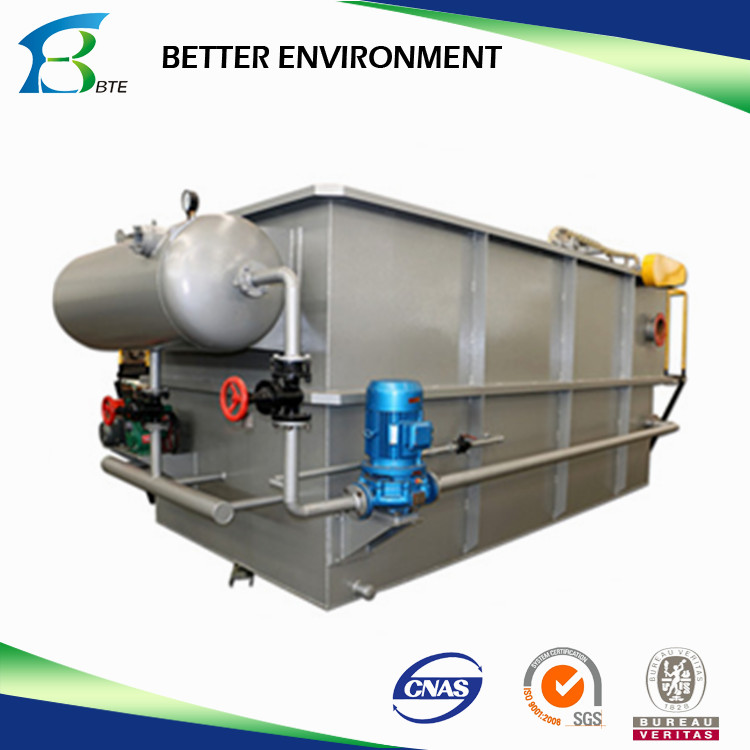
DAF is most useful when a large part of the wastewater problem is associated with suspended or floatable material.
Typical examples include:
Paper machine white water
Fiber-rich process wastewater
Fine paper fibers
Mineral fillers
Suspended solids
Chemically formed flocs
Particulate organic matter
Recycled paper wastewater with high solids loading
One advantage of flotation is that it does not require every particle to settle.
Air bubbles help move suspended solids toward the surface, where they can be collected mechanically. This makes flotation particularly relevant when wastewater contains light solids or fine fibers that would otherwise require longer clarification times.
But DAF should not be selected only because a wastewater sample has “high COD.”
The source of that COD matters.
This is one of the most important questions when designing a paper mill wastewater treatment system.
COD is a measurement of oxygen demand. It does not tell you whether the pollution is suspended or dissolved.
That distinction affects treatment.
DAF is generally suited to separating:
Cellulose fibers
Paper fines
Suspended solids
Calcium carbonate
Clay and similar fillers
Pigment-containing solids
Coagulated colloidal particles
Particulate organic matter
Particulate COD
When these contaminants make up a significant part of the wastewater load, primary flotation can reduce the amount of material sent to the biological stage.
DAF is much less effective when contaminants remain dissolved in the water.
Examples may include:
Dissolved starch
Soluble sugars
Dissolved organic acids
Some lignin-related compounds
Other soluble organic contaminants
These materials do not simply float because air bubbles are introduced.
A useful rule is simple:
If the pollution can be converted into separable solids, primary treatment may remove it. If it remains dissolved, another treatment mechanism is usually needed.
This is why total COD reduction varies widely between mills.
A wastewater stream containing large amounts of fiber may show substantial COD reduction after solids separation because much of the COD was associated with suspended material.
Another wastewater stream may look relatively clear but still have high COD because the organic load is mostly dissolved.
In that case, installing a larger DAF unit will not solve the underlying problem.

Instead of starting with equipment, start with the wastewater.
Three simplified situations illustrate the difference.
Common characteristics:
Large fiber load
High white water solids
Fillers and fines
Relatively high turbidity
The main priority is solids removal.
A possible treatment route is:
Screening → Coagulation/Flocculation → DAF
Biological treatment may still be needed depending on the remaining BOD, COD, and discharge requirements.
The water may not look extremely dirty, but laboratory analysis shows substantial organic loading.
In this case, the problem is not primarily suspended solids.
A possible treatment route becomes:
Equalization → Biological Treatment → Polishing if Required
DAF may still be included for pretreatment, but it should not be expected to remove most soluble organic matter.
This is common in more challenging industrial wastewater.
The treatment system needs to separate solids without ignoring the dissolved load.
A typical logic is:
Screening → Equalization → Coagulation/Flocculation → DAF → Biological Treatment
Here, DAF protects the biological system by removing material that does not need to enter the aeration or anaerobic stage.
The biological system can then focus more effectively on dissolved biodegradable pollution.
Equipment suppliers often focus on treatment capacity, but unstable influent can be just as important as average flow.
Suppose a paper mill normally sends a relatively stable wastewater stream to its treatment plant.
Then a machine cleaning cycle begins.
Within a short period, wastewater flow rises, suspended solids increase, and pH changes.
A DAF system that performs well under normal conditions may suddenly receive a completely different influent.
Chemical dosing based only on the previous condition may no longer be suitable.
An equalization tank helps smooth these changes.
This makes it easier to control:
Wastewater flow
pH adjustment
Coagulant dosing
Polymer dosing
DAF operation
Biological loading
For mills with frequent grade changes or irregular washdowns, equalization should be considered during process design rather than treated as an afterthought.
Chemical treatment is often necessary when very fine fibers and colloidal particles do not separate effectively on their own.
However, chemical consumption can become a major operating cost.
There is no single polymer or coagulant dosage that is correct for every paper mill.
Wastewater characteristics change with:
Paper grade
Recycled fiber content
Filler dosage
Production chemicals
pH
Temperature
Solids concentration
A practical approach is to conduct jar tests using representative wastewater.
The goal is not to produce the clearest possible jar at any cost.
The goal is to find a treatment condition that provides acceptable separation with reasonable chemical consumption and manageable sludge production.
Operators should also observe floc quality.
Very weak flocs may break before reaching the flotation zone. Extremely heavy or poorly structured flocs may also perform differently than expected.
Chemical optimization therefore needs to work together with hydraulic and mechanical operation.
Removing contaminants from water creates another stream that must be managed.
DAF sludge from paper mill applications may contain:
Recovered fibers
Fillers
Fine suspended solids
Chemical flocs
Water
In some processes, recovered fiber may have reuse value.
In others, contamination, mixed paper grades, fillers, inks, or chemical additives can make direct reuse impractical.
When reuse is not possible, sludge normally requires thickening or dewatering before disposal or further handling.
Possible equipment includes:
Screw presses
Filter presses
Centrifuges
Other sludge dewatering systems
Sludge handling should be considered when designing the wastewater treatment plant.
A treatment process that produces excellent clarified water but creates difficult or expensive sludge may not provide the best overall operating result.
A useful equipment quotation requires more than the statement:
“We need a paper mill wastewater treatment system.”
Before sizing a DAF system or complete treatment line, prepare as much of the following information as possible.
Provide:
Average flow
Peak flow
Operating hours per day
Whether flow is continuous or intermittent
Peak conditions can be more important than daily averages.
Useful parameters include:
TSS
COD
BOD
pH
Temperature
Turbidity
Oil or grease where relevant
If possible, provide results from more than one production condition.
Explain where the wastewater comes from.
For example:
Paper machine white water
OCC processing
Deinking
Pulping
Equipment washing
Mixed plant wastewater
This information helps explain what laboratory numbers alone may not show.
Paper mills should indicate the presence of:
Cellulose fibers
Short fibers
Calcium carbonate
Clay
Ash
Pigments
Adhesives
Starch
These materials affect separation and chemical treatment.
The target determines the process.
Is the water being:
Discharged to a municipal system?
Discharged directly?
Returned to production?
Used for washing?
Sent to membrane treatment?
Different targets require different treatment designs.
For retrofit projects, provide information about existing:
Screens
Tanks
Clarifiers
Biological systems
Sludge dewatering equipment
Pumps and piping
Available installation space
This can prevent unnecessary equipment replacement and make integration easier.
Several mistakes appear repeatedly in wastewater projects.
High COD does not automatically mean DAF is the answer.
Determine how much pollution is suspended and how much is dissolved.
Short-duration peaks can overload equipment even when daily average flow looks acceptable.
A sample collected during one stable shift may not represent the wastewater generated during cleaning or grade changes.
More coagulant or polymer is not always better.
Excessive dosing increases cost and can increase sludge production without providing proportional treatment benefits.
The removed solids must go somewhere.
Sludge storage, pumping, dewatering, and disposal should be included in the project from the beginning.
Screening, flotation, biological treatment, and tertiary treatment solve different problems.
Good wastewater treatment comes from combining the right processes, not asking one machine to perform every function.
Yes, but mainly when COD is associated with suspended or colloidal material that can be separated.
If much of the COD is dissolved, biological or other downstream treatment will still be required.
White water often contains fine fibers and fillers that can be difficult to remove quickly by settling alone.
Flotation uses air bubbles to carry suspended material toward the surface for mechanical removal, making it useful for fiber-rich streams.
Potentially, yes.
The required treatment level depends on where the water will be reused. Water used for general washing may have different quality requirements from water used in spray systems or sensitive production processes.
Further filtration or polishing may therefore be needed.
Not necessarily.
It depends on wastewater composition and discharge requirements.
When significant biodegradable dissolved COD or BOD remains after primary treatment, biological treatment is commonly required.
Neither technology is automatically better for every application.
Gravity clarification can work well where solids settle effectively and sufficient space is available. DAF becomes particularly attractive for light suspended particles, fine fibers, chemically formed flocs, or applications where flotation provides better separation for the specific wastewater.
Sizing should consider more than total flow.
Important information includes hydraulic loading, peak flow, suspended solids loading, wastewater characteristics, chemical conditioning, required effluent quality, and sludge production.
Testing representative wastewater is preferable to selecting equipment from industry averages alone.
Effective paper mill wastewater treatment starts with separating suspended solids from dissolved pollutants.
Fibers, fines, fillers, and particulate COD should be removed early using screening, coagulation/flocculation, and dissolved air flotation (DAF). DAF is effective for removing suspended solids and fine fibers, while biological treatment is usually needed for dissolved organic matter.
A good treatment system does not need the most equipment. Each stage simply needs to perform the right function.
Before designing or upgrading a system, paper mills should collect reliable flow and water-quality data. Screening, equalization, DAF, biological treatment, sludge handling, and water reuse can then be selected based on actual wastewater conditions.
Shandong Better Environmental Protection Technology Co., Ltd. provides industrial wastewater treatment equipment and integrated solutions for applications including air flotation, sewage treatment, sludge handling, and water treatment. For paper mill projects, equipment configuration can be evaluated according to wastewater flow, TSS and COD characteristics, treatment targets, available space, and the requirements of the existing treatment process.


