


BETTER
8421299090
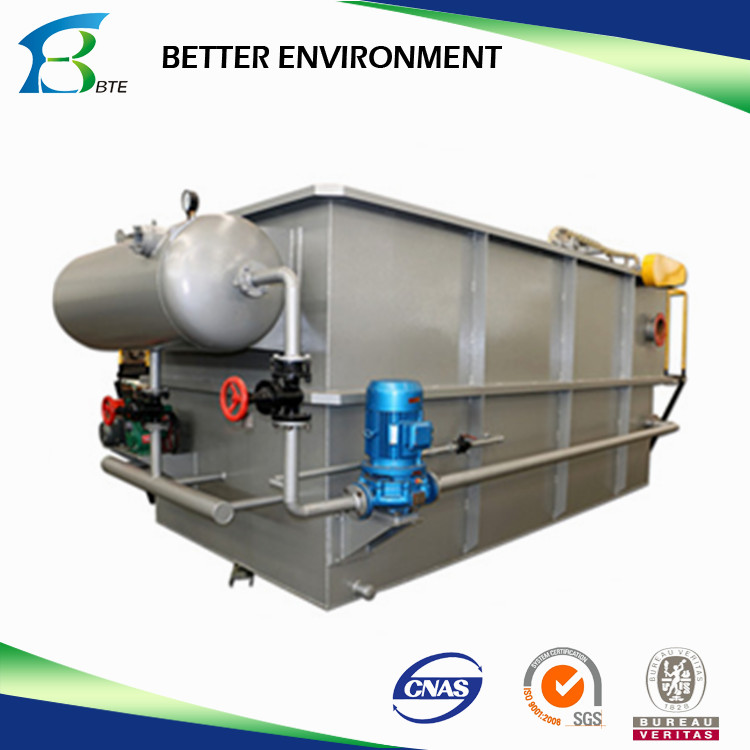
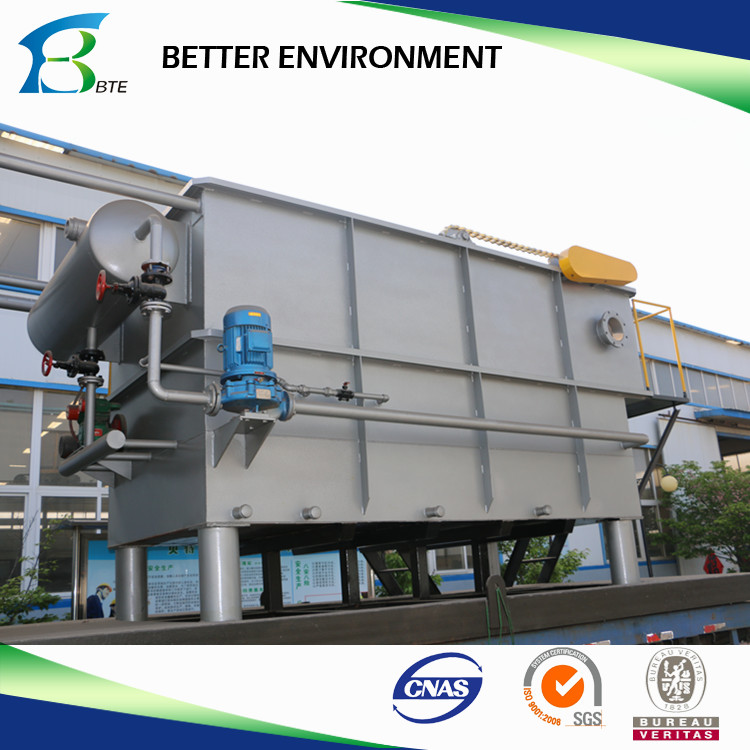
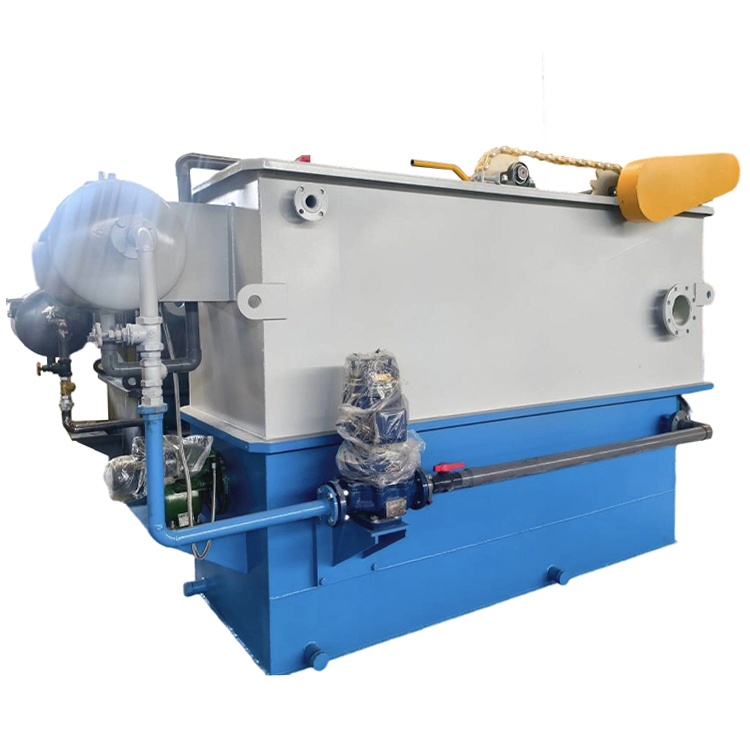
The Dissolved Air Flotation (DAF) system is a highly efficient wastewater pre-treatment solution designed to remove suspended solids (SS), oils, grease, and other floatable contaminants from industrial wastewater. By dissolving compressed air into recycled water under pressure, the system produces 30–50 μm microbubbles that attach to suspended particles, reducing their density and lifting them to the surface for efficient separation.
Once wastewater enters the flotation tank, the microbubble flotation process rapidly separates contaminants from the clarified water. A continuous mechanical skimmer automatically removes the accumulated sludge into the sludge collection hopper, while the treated effluent flows to downstream treatment processes. This continuous operation ensures stable separation efficiency, reduced manual intervention, and reliable long-term performance.
Engineered with heavy-duty, corrosion-resistant materials, the DAF system is designed to operate reliably under demanding industrial conditions, including wastewater containing high concentrations of suspended solids, oil, grease, or chemically aggressive substances. Its robust construction minimizes maintenance requirements and extends equipment service life.
By significantly reducing the pollutant load before biological treatment, the DAF system improves overall treatment efficiency, lowers operating costs, reduces chemical and energy consumption, and helps facilities comply with increasingly stringent wastewater discharge regulations. It is widely applied in food processing, chemical manufacturing, oil & gas, textile, paper, municipal wastewater, and many other industrial sectors requiring high-performance solid-liquid separation.
Efficient removal of suspended solids, oil, grease, and floatable contaminants
High flotation efficiency using 30–50 μm microbubble technology
Continuous automatic sludge removal for stable operation
Reduces the load on downstream biological treatment systems
Low maintenance requirements and long service life
Corrosion-resistant construction for harsh industrial environments
Supports regulatory compliance while reducing wastewater treatment costs
| Specification | Capacity (m3/h) | Dissolved gas water (m3/h) | Main dynamo power (kw) | Foam scraper power (kw) | Air compressor power (kw) | Dissolved air tank size (mm) | Overall dimension (mm) |
| YW-5 | 2-5 | 1.5-2 | 3 | 0.55 | 1.5 | Φ400x1000 | 3300x1800x2200 |
| YW-10 | 8-10 | 2-3 | 4 | 0.55 | 1.5 | Φ500x1512 | 4000x2100x2200 |
| YW-20 | 15-20 | 5-7 | 7.5 | 055 | 1.5 | Φ500x1512 | 4600x2400x2200 |
| YW-30 | 20-30 | 6-10 | 7.5 | 0.55 | 1.5 | Φ500x1512 | 5200x2600x2400 |
| YW-40 | 30-40 | 8-13 | 7.5 | 0.75 | 2.2 | Φ600x1880 | 6000x2600x2400 |
| YW-50 | 40-50 | 15-20 | 7.5 | 0.75 | 2.2 | Φ600x1880 | 7000x2600x2400 |
| YW-60 | 50-60 | 18-27 | 11 | 0.75 | 2.2 | Φ600x1880 | 7600x2800x2400 |
| YW-70 | 60-70 | 22-30 | 11 | 0.75 | 3 | Φ650x2034 | 8400 x2800x2400 |
| YW-80 | 70-80 | 24-32 | 11 | 0.75 | 3 | Φ650x2034 | 9200x2800x2400 |
| YW-100 | 90-105 | 30-35 | 15 | 0.75 | 4 | Φ700x1980 | 10000x2800x2600 |
| YW-150 | 125-150 | 60-80 | 22 | 1.1 | 4 | Φ800x1980 | 13500x2800x2600 |
| YW-200 | 175-200 | 80-100 | 22 | 1.1 | 5.5 | Φ800x2100 | 15800x2800x2600 |
| YW-250 | 225-250 | 110-120 | 22 | 1.1 | 5.5 | Φ800x2400 | 15200x3400x2600 |
| YW-300 | 280-300 | 120-180 | 37 | 1.1 | 5.5 | Φ1000x2900 | 19200x3400x2800 |

Beneath the rugged exterior lies a sophisticated hydraulic instrument designed for precision separation. The engineering architecture prioritizes fluid dynamics and optimal gas-liquid mixing to ensure every cubic meter of water is treated with absolute consistency.
Precision Bubble Sizing: Generates uniform micro-bubbles in the crucial 30 to 50-micron range, providing the ideal buoyancy-to-mass ratio for lifting heavy industrial flocs.
Optimized Air-to-Solid (A/S) Ratio: The intelligent dissolved gas water mechanism (ranging from 1.5 to 180 m³/h) ensures the perfect saturation level, preventing floc shear while maximizing lift.
Controlled Hydraulic Loading: The flat-flow tank geometry is mathematically modeled to maintain a laminar flow regime, preventing turbulence that could disrupt the delicate sludge blanket.
High-Velocity Jet Device: Incorporates a specialized releaser and jet device that instantly depressurizes the saturated water, triggering an explosive yet controlled release of lifting bubbles.
Industrial environments are unforgiving, exposing equipment to extreme pH fluctuations, abrasive solids, and corrosive chemicals. This separation unit is fabricated to endure these harsh realities, offering a prolonged lifecycle with minimal structural degradation.
Corrosion-Resistant Construction: Engineered with premium-grade materials, including options for heavy-duty epoxy-coated carbon steel or high-grade stainless steel, to withstand aggressive chemical matrices.
Reinforced Tank Integrity: The main flotation pond features heavy-gauge welding and structural ribbing, preventing deformation under maximum hydrostatic loads.
Wear-Resistant Scraper Mechanism: The motorized foam scraper is equipped with heavy-duty, chemical-resistant blades that maintain a tight seal against the tank walls without degrading over time.
Weatherproof Dynamo and Compressor: All external motors and pneumatic components are housed in protective, IP-rated enclosures, ensuring reliable operation in high-humidity or outdoor installations.
Modern processing facilities demand equipment that operates autonomously, reducing the need for constant manual oversight and mitigating the risk of human error. This system integrates advanced logic controls to deliver a true plug-and-play purification experience.
Intelligent PLC Integration: Centralized control panels allow for precise parameter tuning, enabling the system to automatically adjust to fluctuating influent flow rates and contamination levels.
Automated Chemical Dosing: Seamlessly interfaces with dosing tanks to inject the exact required volumes of coagulants and flocculants, optimizing chemical usage and reducing operational expenses.
Continuous Unattended Operation: The synchronized action of the clear water pump, air compressor, and sludge scraper allows for 24/7 continuous processing without manual intervention.
Real-Time Flow Monitoring: Integrated flow meters and pressure gages provide instant visual feedback on system health, allowing maintenance personnel to diagnose potential issues before they cause downtime.
Floor space is a premium asset in any manufacturing plant. This unit challenges the traditional reliance on sprawling gravity settling tanks by offering a highly concentrated, rapid separation process within a remarkably compact spatial footprint.
High-Density Processing: Achieves the same or better clarification results as massive secondary sedimentation basins but requires only a fraction of the physical land area.
Skid-Mounted Modularity: The compact structural design allows for rapid deployment, easy integration into existing pipeline networks, and simplified relocation if plant layouts change.
Reduced Civil Engineering: Eliminates the need for deep excavations or extensive concrete pouring, significantly lowering initial capital expenditures and accelerating project commissioning times.
Vertical Space Utilization: Thoughtfully engineered overall dimensions (ranging up to 19200x3400x2800 mm for the largest capacity) maximize volumetric throughput while maintaining a narrow operational profile.Sludge Handling & OPEX
The true cost of wastewater treatment often lies in the disposal of the separated solid waste. This equipment fundamentally alters the economics of sludge management by producing a highly concentrated, low-volume byproduct that is easier and cheaper to handle.
High Dry-Solids Content: The aggressive flotation mechanism generates a thick, buoyant sludge blanket with a dry solids concentration of 2% to 5%, significantly outperforming traditional settling methods.
Optimized Dewatering: The pre-thickened float dramatically reduces the hydraulic load on downstream filter presses or centrifuges, lowering their energy consumption and extending filter cloth lifespans.
Energy-Efficient Components: Utilizing high-efficiency main dynamos (3 to 37 kW) and optimized air compressors, the system delivers massive separation power while keeping electrical utility costs strictly controlled.
Reduced Haulage Fees: By minimizing the water content in the extracted waste, facilities can drastically cut the logistical costs associated with trucking away liquid sludge.
No two industrial effluents are identical. Recognizing the unique chemical and physical properties of different waste streams, this separation platform is highly adaptable, ensuring optimal performance across a broad spectrum of heavy industries.
Food & Beverage / Slaughterhouses: Exceptionally proficient at removing high concentrations of animal fats, blood, and suspended proteins, preventing pipeline blockages and biological overloads.
Pulp & Paper Manufacturing: Highly effective at recovering valuable cellulose fibers and paper pulp from the white water stream, turning a waste product back into a usable raw material.
Petrochemical & Refining: Safely and efficiently separates emulsified hydrocarbon oils and complex petrochemical derivatives from the aqueous phase.
Textile & Dyeing: Aids in the rapid agglomeration and removal of synthetic dyes, sizing agents, and fine particulate matter, significantly reducing the visual turbidity of the discharge.
Tannery & Leather Processing: Robust enough to handle extreme suspended solid loads, hair, and residual chemical coagulants typical in leather manufacturing.
Partnering with a dedicated manufacturer of environmental technology means securing an asset that guarantees long-term operational security. We do not just supply machinery; we engineer comprehensive fluid purification solutions tailored to your specific regulatory and production landscape.
End-to-End Engineering Support: From initial water matrix analysis to final site commissioning, our technical team provides comprehensive guidance to ensure the equipment perfectly matches your facility's requirements.
Stringent Quality Assurance: Every unit undergoes rigorous hydrostatic testing, weld inspections, and motorized component benchmarking before leaving our manufacturing floor, ensuring zero defects upon arrival.
Global Logistics Expertise: We possess deep experience in securely crating, shipping, and delivering heavy-duty environmental equipment to complex industrial sites worldwide, ensuring your project timelines are met.
Readily Available Replacement Parts: By standardizing our core mechanical components, we maintain a robust inventory of critical spares, guaranteeing rapid dispatch and minimal operational downtime.
Commitment to Sustainability: Our designs prioritize energy efficiency and maximum resource recovery, helping your enterprise achieve its corporate environmental responsibility targets while boosting profitability.
To assist procurement managers and facility engineers in their evaluation process, we have compiled detailed responses to the most critical technical inquiries regarding our separation equipment.
What is the typical retention time required within the flotation pond for optimal separation?
The hydraulic retention time (HRT) is highly dependent on the specific influent characteristics and the chemical dosing regimen. However, the flat-flow design typically operates with an HRT ranging from 15 to 30 minutes, which is significantly faster than the hours required by conventional gravity clarifiers.
How does the system handle sudden spikes in influent flow or contamination levels?
The equipment is engineered with a generous hydraulic buffer and an intelligent PLC system. During sudden shock loads, the automated dosing system can instantly adjust coagulant/flocculant ratios, while the variable speed drives on the dissolved gas pump can increase the air-to-solid ratio to maintain consistent effluent quality.
Can this equipment completely replace a biological treatment phase?
No. This machine is a highly advanced physical-chemical pre-treatment step. While it removes 90%+ of TSS and FOG and up to 50% of COD, dissolved organic matter must still be processed by a downstream biological system (such as an MBR or aeration tank). Its primary role is to protect and optimize that biological phase.
What are the routine maintenance requirements for the motorized foam scraper?
The scraper assembly is designed for low maintenance. Routine requirements include monthly visual inspections of the scraper blades for uneven wear, quarterly lubrication of the drive chain and bearings, and annual tension checks on the driving mechanism to ensure smooth, continuous sweeping.
Is it necessary to use chemical additives (coagulants/flocculants) with this system?
While the micro-bubbles can physically lift naturally buoyant particles, achieving the >90% removal efficiency for fine, emulsified, or dissolved contaminants absolutely requires proper chemical conditioning. Coagulants neutralize particle charges, and flocculants bind them into larger, easily lifted flocs.


