Views: 0 Author: Site Editor Publish Time: 2026-09-14 Origin: Site
Why pay to transport water instead of solid waste? Improving sludge cake dryness can reduce hauling trips, disposal volumes, and operating costs.
Choosing sludge dewatering equipment requires balancing cake dryness, processing capacity, energy use, polymer consumption, maintenance, and initial investment. The right system must also match the sludge type and changing feed conditions.
In this article, you will learn how to evaluate sludge characteristics, facility requirements, lifecycle costs, and supplier support when selecting a dewatering system.
Sludge profiling dictates technology: The choice of a sludge dewatering machine must begin with a quantitative analysis of your specific sludge type (biological, chemical, municipal, or industrial) and target dry solids (DS) concentration.
Lifecycle economics supersede CAPEX: High-efficiency machines (like centrifuges) may have higher upfront costs but can offset them through lower disposal and footprint costs, whereas low-energy options (like screw presses) minimize long-term utility expenses.
Polymer and chemical conditioning are non-negotiable variables: The operational viability of any dewatering equipment relies heavily on the cost and dosing requirements of flocculants.
Pilot testing mitigates implementation risk: Theoretical performance rarely matches real-world application; empirical pilot testing is a mandatory step in the procurement process.
Table of Contents
Equipment selection begins in the laboratory. The physical and chemical properties of your waste stream dictate which mechanical separation methods will succeed and which will fail prematurely. You cannot force a machine to process a sludge it was not designed to handle.
The origin of your sludge fundamentally impacts its dewaterability. Primary sludge consists of easily settleable solids, fibers, and grit. It releases water readily and responds well to most mechanical pressing. Because the particles are relatively large and discrete, water drains from primary sludge with minimal chemical intervention.
Secondary, or biological sludge, presents a much harder challenge. It contains waste activated sludge (WAS) full of microorganisms and extracellular polymeric substances (EPS). These biological components tightly bind water within cellular structures. Dewatering biological sludge requires significant chemical conditioning to break these bonds and release the trapped water. Without proper polymer dosing, biological sludge turns into a blinding paste inside mechanical presses.
Tertiary sludge often involves chemical precipitates like alum or ferric chloride. These create fragile flocs that shear easily under high mechanical stress. Industrial sludges introduce extreme variables. Highly abrasive sludges containing metal shavings, glass, or sand will rapidly destroy the tight tolerances of certain equipment. Conversely, oily or greasy sludges will quickly blind the porous media of standard filtration systems, requiring specialized self-cleaning mechanisms.
Sludge Type | Dewaterability | Typical Challenges | Expected Cake Dryness (DS %) |
|---|---|---|---|
Primary Municipal | High | Grit wear on mechanical parts | 25% - 35% |
Secondary (Biological) | Low to Medium | High bound water, requires heavy polymer | 15% - 22% |
Chemical (Alum/Ferric) | Medium | Fragile flocs shear easily | 20% - 30% |
Industrial (Oily/Greasy) | Low | Blinds filter media rapidly | 15% - 40% (Highly variable) |
Throughput requirements must be calculated using both hydraulic loading rates (gallons per minute or cubic meters per hour) and solids loading rates (pounds or kilograms of dry solids per hour). Facilities must account for peak flow conditions rather than just historical averages. A machine sized only for average flow will become a severe bottleneck during storm events or production surges.
Your operational schedule also dictates equipment sizing. A plant operating a single eight-hour shift requires a machine with three times the hourly throughput capacity of a plant running continuous 24/7 operations. Batch processing systems demand large upstream holding tanks to buffer the continuous flow of the wider plant. You must evaluate your storage capacity before committing to a batch-process machine.
The relationship between cake dryness and disposal volume is non-linear. Increasing your dry solids output from 2% to 20% eliminates roughly 90% of the total volume. Pushing that dryness from 20% to 22% yields further exponential reductions in hauling requirements. You must define the exact DS percentage required by your disposal outlet.
Landfills enforce strict limits on free liquids, often utilizing the Paint Filter Liquids Test. If your cake fails this test, the landfill rejects the load. Incinerators require highly combustible, ultra-dry cake to maintain furnace temperatures without supplemental fuel. Composting facilities might require a specific moisture content to maintain microbial activity. Work backward from your disposal requirements to set your equipment performance baseline.
The market offers five primary mechanical approaches to separating solids from liquids. Each technology leverages different physical forces to achieve the final cake. Understanding the mechanical realities of each system prevents costly misapplications.
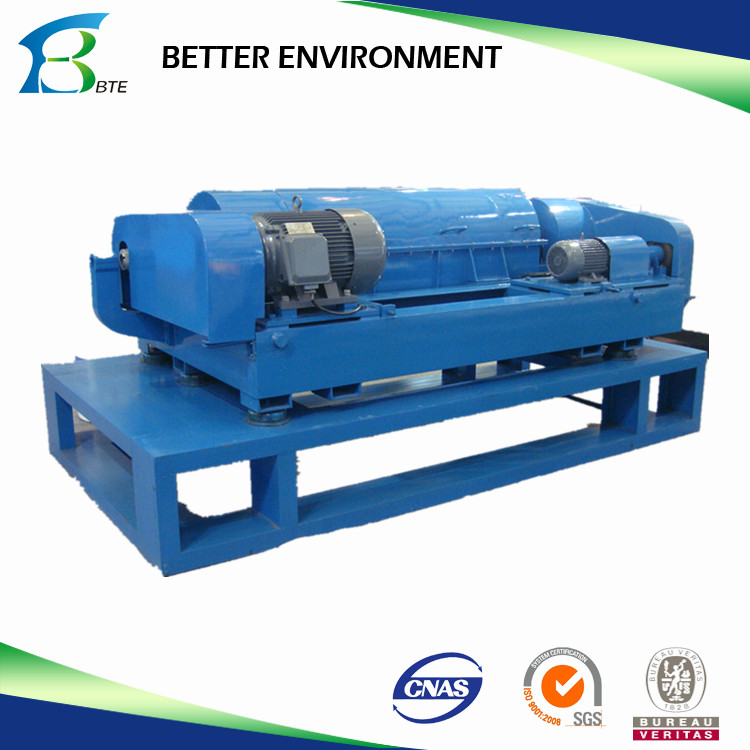
These machines utilize high-speed rotational separation. Sludge enters a rapidly spinning cylindrical bowl, creating centrifugal forces up to 3000 times gravity. Heavy solids pack against the bowl wall, while an internal scroll conveyor rotating at a slightly different speed pushes the dried cake toward the discharge port. The clarified liquid (centrate) flows out the opposite end over adjustable weir plates.
Centrifuges are the best fit for high-throughput municipal and industrial plants requiring continuous, unattended operation within a very compact physical footprint. They handle varying feed concentrations well and contain odors entirely within the machine casing.
However, centrifuges draw massive amounts of electrical power to maintain high rotational speeds. They generate significant noise and vibration. Maintenance is highly specialized. Rebuilding a worn scroll requires precision balancing and hard-facing with tungsten carbide tiles by trained technicians. You cannot perform major centrifuge overhauls in the field.
Sludge undergoes gravity drainage before entering a wedge zone, where it is squeezed between two tensioned, porous synthetic belts. The belts weave through a series of decreasing-diameter rollers, applying increasing mechanical pressure to shear and squeeze out remaining water. Pneumatic or hydraulic cylinders maintain belt tension and tracking.
Belt presses fit medium-to-large facilities prioritizing continuous throughput with moderate energy consumption. They provide reliable, visible operation where operators can physically see the flocculation and drainage process happening in real-time.
The trade-offs include a massive physical footprint. Belt presses consume high volumes of clean wash water (often 80-100 psi) to continuously spray the belts and prevent blinding. Because they are open systems, they release significant odors, hydrogen sulfide, and aerosols into the surrounding facility, requiring extensive HVAC and odor control infrastructure.
A slow-moving auger rotates inside a cylindrical screen or a series of self-cleaning multi-disc rings. The pitch of the screw narrows while the shaft diameter increases, gradually building immense pressure to squeeze water through the screen gaps. A pneumatic back-pressure cone at the discharge end regulates the final cake dryness.
These units are ideal for small-to-medium facilities prioritizing low energy consumption, virtually silent operation, and minimal operator intervention. Multi-disc variants excel particularly with oily, low-concentration sludges because the moving rings constantly clear the filtration gaps, preventing the blinding that plagues belt presses.
They offer lower throughput capacity per unit compared to high-speed centrifuges. Traditional perforated-screen screw presses may struggle with highly abrasive sludges that wear down the tight clearance between the auger flight and the screen. Once that clearance opens up, capture rates plummet and solids wash out with the filtrate.
This is a high-pressure batch process. Heavy-duty feed pumps force conditioned sludge into a series of recessed chambers lined with filter cloths. Once the chambers fill, hydraulic rams compress the plates, driving water through the cloths and leaving behind solid, highly compressed cakes. Some advanced models include flexible membranes that inflate with compressed air to squeeze the cake a second time.
Filter presses dominate industrial applications like mining, metal finishing, or chemical manufacturing that require the absolute highest possible cake dryness, often exceeding 40-50% DS. They capture extremely fine particles that other machines miss.
The process is inherently discontinuous. It requires significant labor to monitor the cycle, separate the plates, drop the heavy cakes, and frequently wash the filter cloths. The equipment also requires massive structural support to handle the hydraulic pressure and the sheer weight of the wet cake loaded in the chambers.
Polymer-conditioned sludge is pumped directly into massive, porous, high-strength textile bags. Water slowly drains through the fabric via passive gravity over weeks or months, leaving consolidated solids inside. Operators periodically pump more sludge into the bags as the volume reduces.
This method fits lagoons, small municipalities, or temporary environmental remediation projects where land availability is abundant and capital expenditure limits are extremely strict. It requires virtually no moving parts other than the feed pump and polymer skid.
This method requires a massive physical footprint. Drying times are highly weather-dependent, slowing down significantly in freezing or heavy rain conditions. Facilities also face ongoing consumable costs, as the bags themselves must be cut open and disposed of alongside the dried sludge once full.
Comparing equipment strictly on initial purchase price guarantees long-term operational failure. A comprehensive evaluation must project the total operational impact over a standard 15-to-20-year equipment lifecycle. You must look past the steel and evaluate the daily realities of running the machine.
A rigorous lifecycle economic analysis contrasts the initial capital expenditure against decades of operating expenses. You must calculate the projected kilowatt-hours required per dry ton of solids processed. Evaluate the replacement frequency and cost of high-wear parts like belts, filter cloths, or auger flights. Factor in the routine labor hours required for daily washdowns, lubrication, and monitoring. A sludge dewatering machine with a low purchase price but high energy and maintenance demands will quickly erase any initial savings.
Different mechanical separation technologies interact differently with chemical flocculants. High-shear environments like centrifuges often require higher polymer doses or more robust, specialized polymer chains to prevent the flocs from tearing apart during separation. Low-shear environments like screw presses generally require less aggressive chemical dosing.
You must also evaluate the polymer make-down equipment. Liquid emulsion polymers require different mixing energies and aging times compared to dry granular polymers. A machine that saves 10% in electrical energy but requires 20% more polymer to achieve the same cake dryness represents a net financial loss for the facility.
Spatial constraints often dictate technology selection before performance metrics are even considered. Evaluate the structural cost of retrofitting existing buildings. Installing a large belt filter press requires significant floor space, extensive drainage trenches, and high ceilings for odor control hoods.
Installing a high-speed centrifuge requires a much smaller horizontal footprint but demands heavy, reinforced concrete foundations to safely absorb dynamic vibrational loads. You also need overhead crane access to lift the heavy bowl assembly during rebuilds. Compact screw presses offer the easiest drop-in integration for tight spaces, often fitting on existing mezzanines without structural reinforcement.
Modern wastewater facilities operate with lean staffing. Compare the operator attention required for each system. Continuous, automated systems like screw presses and centrifuges can often run unattended overnight, utilizing SCADA integration and torque-monitoring sensors to adjust to changing sludge conditions automatically.
Manual or semi-automated batch systems, such as plate and frame presses, require dedicated operators to manage the fill cycles, clear stuck cakes, and perform intensive cleaning routines. If your facility lacks dedicated dewatering operators, you must prioritize highly automated, self-cleaning technologies.
The manufacturer's track record and support infrastructure are as critical as the machine's steel construction. Assess the availability of local field service engineers and guaranteed lead times for proprietary spare parts. Extended downtime while waiting for an overseas shipment of a specialized centrifuge scroll can cripple a plant.
Evaluate the vendor's specific engineering experience with your exact industry waste stream. A vendor who exclusively builds municipal machines may not understand the chemical resistance required for a metal plating facility's sludge. Ask for reference sites processing similar sludge and call those operators directly.
Sludge dewatering performance can vary significantly between design assumptions and actual operating conditions. Pilot testing, phased investment, correct auxiliary equipment, and disposal planning can reduce procurement risks.
Laboratory data and standard case studies cannot fully predict real-world performance. Sludge composition, temperature, solids concentration, and polymer response may change over time.
Begin with jar testing to identify suitable polymers and dosing ranges. For larger projects, conduct on-site pilot testing to evaluate actual throughput, cake dryness, solids capture, energy consumption, and chemical demand under changing conditions.
Facilities with limited budgets or uncertain future capacity can begin with a mobile or modular dewatering unit. This allows operators to confirm performance before investing in a permanent system.
Additional units can be installed as treatment demand increases. A modular arrangement also provides backup capacity when one unit is undergoing maintenance.
A Sludge Dewatering Machine requires correctly selected supporting equipment. Feed pumps must deliver a stable flow without damaging the formed flocs. Screening or grinding equipment may also be required to prevent large debris from blocking or damaging the machine.
Sludge cake handling should be planned at the same time. Screw conveyors, belt conveyors, storage hoppers, and disposal containers must match the machine’s output to prevent production interruptions.
The required cake dryness depends on how the sludge will be transported, reused, incinerated, or disposed of. Some disposal facilities may reject sludge cake containing excessive free liquid.
Before selecting equipment, confirm local disposal standards and test requirements. Facilities should also consider how future restrictions on contaminants such as heavy metals, PFAS, or microplastics could affect their sludge management strategy.
Selecting the optimal separation equipment is a rigorous exercise in balancing sludge physics, facility spatial constraints, long-term operational economics, and vendor reliability. Rushing the evaluation process or relying solely on initial purchase price inevitably leads to chronic operational bottlenecks and inflated disposal costs.
Technology Type | Primary Advantage | Ideal Application Scenario |
|---|---|---|
Screw Press (Volute) | Low energy, low maintenance, handles oily sludge | Small to medium plants prioritizing low utility costs and quiet operation. |
Centrifuge Decanter | High throughput, very small footprint | Large municipal or industrial plants with limited space and continuous high flow. |
Belt Filter Press | Moderate energy, reliable continuous output | Medium to large plants with ample space and access to cheap wash water. |
Plate & Frame Press | Maximum possible cake dryness | Industrial applications (mining, chemical) where extreme dryness is mandatory. |
Geomembrane Bags | Lowest initial capital cost | Lagoons or temporary sites with massive land availability and time to spare. |
To move forward with your facility upgrade, execute the following steps:
Compile a comprehensive data profile of your current sludge, including daily volume, historical dry solids percentage, and peak flow rates.
Calculate your exact current disposal costs, including hauling fees, landfill tipping fees, and polymer consumption rates.
Contact an application engineer from a reputable manufacturer to review your data and schedule an on-site sludge audit.
Arrange for a mobile pilot test skid to process your live waste stream for a minimum of two weeks to verify performance metrics.
A: Screw presses, particularly multi-disc volute models, are generally the most energy-efficient mechanical option. They rely on slow-rotational mechanics, typically operating at 0.5 to 2 RPM. This slow movement requires a fraction of the electrical horsepower needed to spin a high-speed centrifuge, drastically reducing long-term utility expenses.
A: Contrast your throughput and footprint needs against your energy and maintenance budget. Centrifuges handle massive volumes in a tiny footprint but consume high energy and require specialized maintenance. Screw presses use minimal energy and operate quietly with low maintenance, but process lower volumes per unit and require more units for massive flows.
A: High-quality mechanical dewatering equipment typically lasts 15 to 25 years. However, this lifespan is heavily contingent on strict adherence to routine maintenance schedules, the availability of OEM support, and the abrasiveness of the sludge. Processing highly abrasive grit without proper upstream screening will significantly shorten equipment life.
A: Polymer dosing is critical for flocculation, which binds fine particles together and releases bound water from cellular structures. Proper conditioning creates strong flocs that withstand mechanical pressure without shearing. Incorrect dosing leads to weak flocs that blind filtration screens, drastically reducing cake dryness and causing liquid carryover.
A: Rarely without modification. Municipal and industrial sludges have vastly different physical properties. A machine must be specifically tuned for the waste stream. Industrial applications often require upgraded metallurgy to handle corrosive chemicals or abrasive grit, along with entirely different chemical conditioning strategies compared to standard biological municipal waste.
A: Geotextile bags are ideal when a facility faces severe capital expenditure constraints but possesses abundant available land and time. They utilize passive gravity drainage, meaning they require almost no energy or daily operator intervention. They are best suited for seasonal lagoon cleanouts or temporary environmental remediation projects.
A: Acceptable benchmarks vary by sludge origin. For standard municipal biological sludge, achieving 15% to 25% DS is considered excellent performance. For primary sludges or specific industrial applications involving heavy minerals, mechanical presses can often achieve 40% to 50% DS. Always target the minimum DS required by your specific disposal facility.