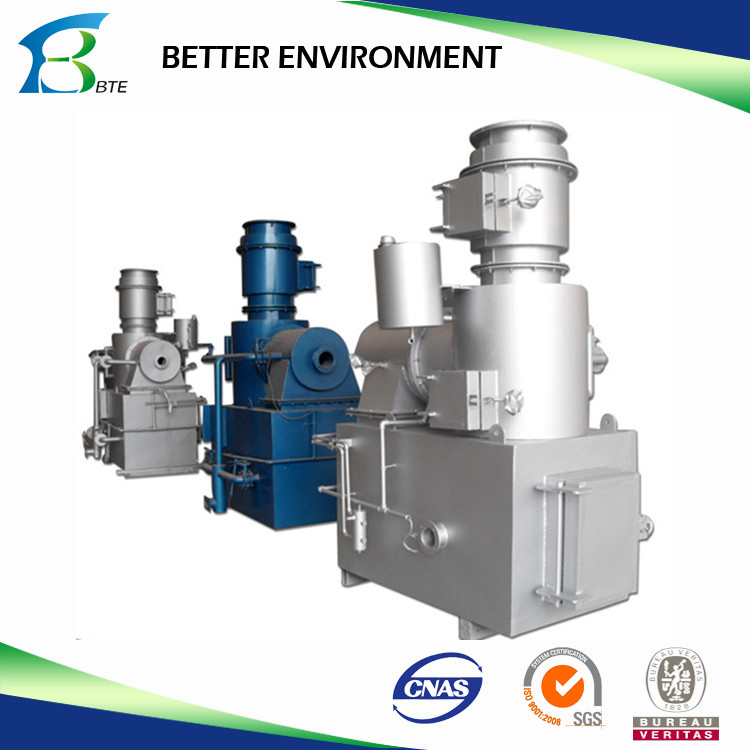
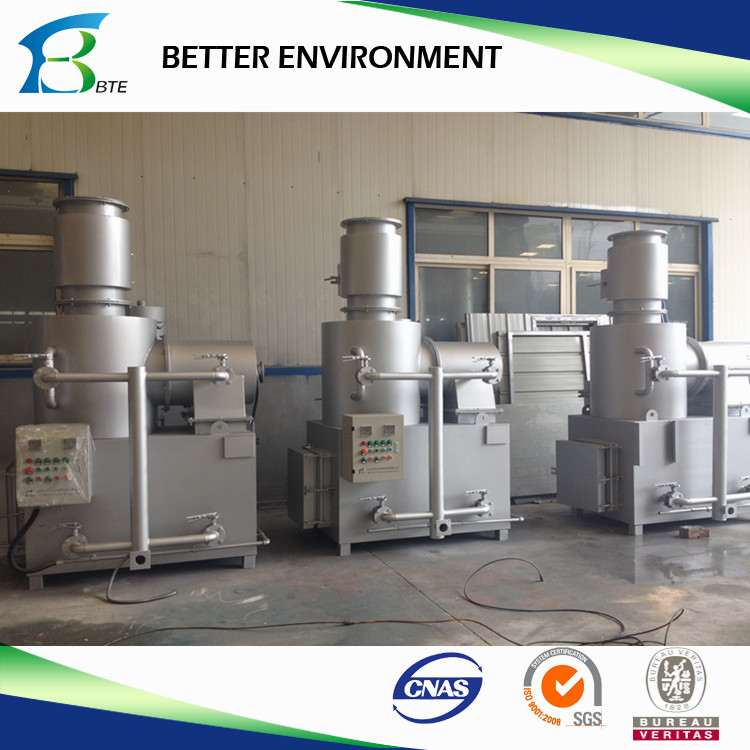
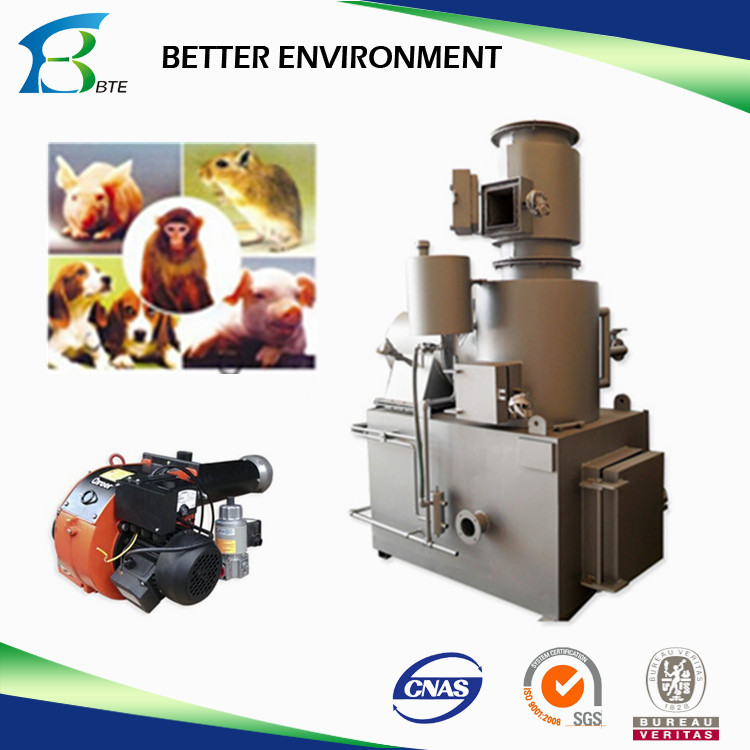
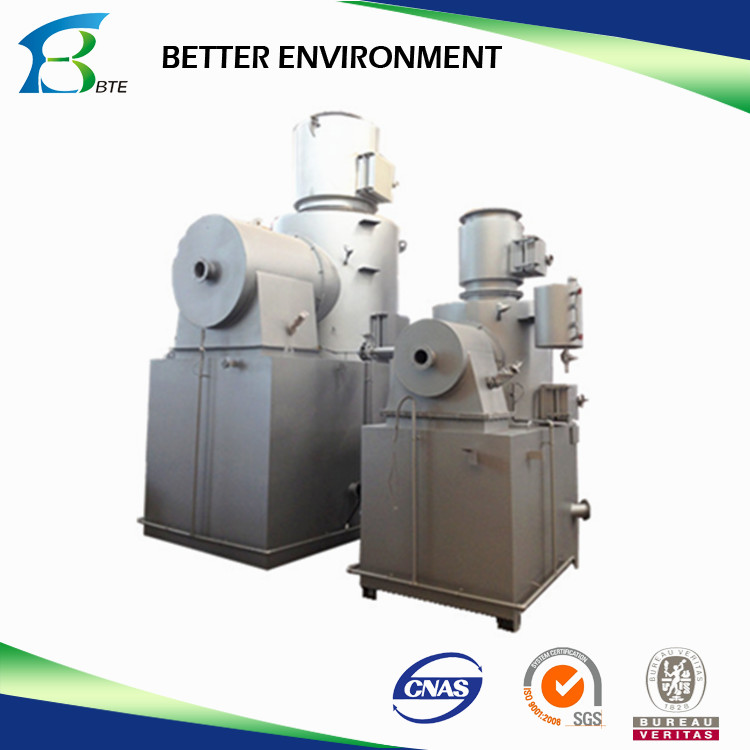
An incinerator is a specialized machine that burns waste at high temperatures under controlled conditions, converting combustible materials into ash, gases, and heat. Incinerators are widely used for medical waste, animal carcasses, industrial waste, municipal solid waste, and pet cremation services.
Unlike open burning, modern waste incinerators use enclosed combustion chambers, controlled airflow, and, where required, emission treatment systems to manage the incineration process.
This guide explains what an incinerator is, how it works, its main components, different types, common applications, and environmental requirements.
Table of Contents
Incinerators are purpose-built furnaces designed for the controlled thermal treatment of waste. They reduce the volume of combustible materials and can destroy pathogens and organic contaminants when operated under suitable conditions.
The main purpose of an incinerator is to provide an effective waste disposal method for materials that cannot be appropriately reused, recycled, or treated through other processes.
Waste incinerators are commonly used in:
Hospitals and healthcare facilities: Treatment of suitable infectious and medical waste.
Farms and agricultural operations: Disposal of livestock carcasses and selected agricultural waste.
Pet cremation services: Controlled cremation of deceased companion animals.
Industrial facilities: Treatment of compatible combustible industrial waste.
Municipal waste management: Volume reduction of household and commercial waste.
Although both involve combustion, an incinerator provides much greater control over the burning process.
Feature | Incinerator | Open Burning |
|---|---|---|
Combustion Environment | Enclosed combustion chamber | Open environment |
Temperature Control | Controlled and monitored | Uncontrolled |
Airflow | Regulated air supply | Natural airflow |
Emission Treatment | Can include pollution-control systems | Usually absent |
Waste Handling | Controlled loading and ash removal | Limited control |
Applications | Medical, animal, industrial and municipal waste | Often restricted or prohibited |
Modern incinerators help improve waste treatment efficiency and operational control. However, their environmental performance depends on the equipment design, waste composition, and appropriate emission management.
An incinerator works by exposing suitable waste to high temperatures inside an enclosed combustion chamber. Heat and oxygen support the breakdown and oxidation of combustible materials, reducing them to gases and residual ash.
Many waste incinerators use primary and secondary combustion chambers to improve combustion performance.
A typical waste incinerator consists of several essential components.
Component | Function |
|---|---|
Primary Combustion Chamber | Burns waste under controlled conditions |
Secondary Combustion Chamber | Supports further combustion of exhaust gases |
Burner System | Provides heat for ignition and combustion |
Refractory Lining | Protects the furnace from high temperatures |
Air Supply System | Regulates oxygen for combustion |
Temperature Control System | Monitors combustion conditions |
Flue Gas Treatment System | Helps reduce selected air pollutants |
Exhaust Stack | Releases treated combustion gases |
Ash Removal System | Allows collection of residual ash |
The specific configuration varies depending on the incinerator type, processing capacity, waste characteristics, and environmental requirements.
Step 1: Waste Loading
Waste is collected, segregated, and loaded into the primary combustion chamber. Loading can be manual or mechanical depending on the equipment design.
Step 2: Heating and Ignition
The burner system raises the chamber temperature to initiate combustion.
Step 3: Primary Combustion
Combustible waste undergoes drying, thermal decomposition, and oxidation, generating heat, gases, and solid residues.
Step 4: Secondary Combustion
Combustion gases may enter a secondary chamber, where additional heat and oxygen support further oxidation of combustible gas components.
Step 5: Flue Gas Treatment
Where required, exhaust gases pass through pollution-control equipment before discharge through the exhaust stack.
Step 6: Ash Removal
After appropriate cooling and shutdown procedures, residual ash is collected and handled according to applicable waste disposal requirements.
The operating temperature of an incinerator depends on the type of waste and the equipment design.
Many waste incineration systems operate at temperatures around 800°C to 1,200°C, although actual operating requirements vary.
Certain regulated applications specify minimum combustion temperatures and gas residence times.
Effective incineration depends on maintaining suitable temperature, oxygen supply, residence time, and waste loading conditions.
There are several types of incinerators designed for different waste streams and treatment capacities.
Incinerators can be classified according to their combustion technology or intended application.
Fixed-chamber incinerators use stationary combustion chambers and are commonly operated in batches.
They are often used for animal waste disposal, selected medical waste, and smaller onsite waste treatment applications.
Rotary kiln incinerators use a rotating cylindrical furnace to mix and transport waste during combustion.
They are commonly used for selected industrial waste streams and specialized hazardous waste treatment.
Moving grate incinerators use mechanical grates to move waste through different combustion stages.
These systems are commonly used in large municipal solid waste incineration plants.
Fluidized bed incinerators use upward airflow to suspend and mix heated bed materials with prepared waste.
They are used for selected industrial waste, sewage sludge, and relatively uniform waste streams.
Incinerator Type | Main Characteristics | Typical Applications |
|---|---|---|
Fixed-Chamber | Stationary combustion chamber | Medical and animal waste |
Rotary Kiln | Rotating furnace for waste mixing | Industrial and specialized hazardous waste |
Moving Grate | Continuous mechanical waste movement | Municipal solid waste |
Fluidized Bed | Uniform mixing and heat transfer | Prepared waste and sewage sludge |
Different incinerator technologies have different requirements for waste preparation, operating capacity, combustion control, and emission treatment.
Waste incinerators are used across multiple industries where controlled thermal waste treatment is required.
Different applications involve different waste characteristics, operating capacities, and equipment requirements.
Medical waste incinerators are used to treat suitable healthcare waste generated by hospitals, clinics, laboratories, and other medical facilities.
Common applications include the treatment of selected infectious materials, contaminated dressings, pathological waste, and other regulated medical waste streams.
High-temperature incineration can help destroy pathogens and reduce the volume of waste requiring final disposal.
Medical waste must be properly segregated, and not every category of healthcare waste is suitable for standard incineration.
Explore BETTER's Medical Waste Incinerator for Hospitals and Clinics.
Animal waste incinerators provide a controlled method for treating animal carcasses and suitable animal by-products.
They are commonly used by livestock farms, poultry farms, slaughterhouses, veterinary facilities, and other animal-related businesses.
Animal carcass incineration can help reduce biological risks associated with the storage and handling of deceased animals.
Common applications include:
Livestock carcass disposal.
Poultry mortality management.
Veterinary pathological waste.
Animal by-product treatment.
Farm biosecurity waste management.
Onsite animal waste incineration may reduce the need to transport carcasses to external treatment facilities where permitted.
Learn more about BETTER's Animal Body Incinerator for Waste Disposal.
Pet cremation services provide a respectful method for handling deceased companion animals, including dogs, cats, and other household pets.
Pet crematoriums, veterinary clinics, animal hospitals, and pet aftercare providers use specialized pet cremation equipment to conduct controlled cremation procedures.
A pet cremation incinerator operates at high temperatures to reduce animal remains to bone fragments and ash, which can then be processed and handled according to the service requirements.
Pet cremation services generally include two main approaches.
Individual Pet Cremation
Individual pet cremation involves cremating one pet separately, allowing the resulting remains to be collected and returned to the pet owner.
This service requires appropriate identification, handling, and ash collection procedures.
Communal Pet Cremation
Communal pet cremation involves cremating multiple animals together. The resulting remains are generally not returned to individual pet owners.
The equipment arrangement and operating procedures depend on the services offered by the facility.
Pet cremation incinerators are commonly used in:
Pet crematoriums and memorial service facilities.
Veterinary clinics and animal hospitals.
Animal aftercare businesses.
Specialized animal cremation facilities.
Pet funeral and memorial service operations.
For businesses establishing or expanding pet cremation services, equipment considerations include cremation chamber capacity, temperature control, fuel consumption, operating procedures, and local emission requirements.
Purpose-designed pet cremation equipment can help service providers maintain consistent cremation procedures while supporting the respectful handling of companion animal remains.
Industrial waste incinerators are used for the thermal treatment of compatible combustible waste generated by manufacturing and industrial operations.
Industrial waste may vary significantly in composition, moisture content, calorific value, and potential hazardous constituents.
Common applications include:
Manufacturing waste treatment.
Selected combustible production residues.
Industrial solid waste volume reduction.
Specialized onsite waste management.
Some industrial waste streams require dedicated hazardous waste incineration technology and more advanced pollution-control systems.
Explore BETTER's Industrial Solid Waste Incinerator.
Municipal waste incinerators are designed to process suitable household and commercial waste.
Large municipal incineration facilities may use continuous combustion systems to handle significant daily waste volumes.
Some installations also incorporate waste-to-energy technology to recover heat and generate electricity.
Municipal waste incineration can help reduce dependence on landfill disposal, although waste separation, recycling, and responsible management of residual ash remain important.
Explore BETTER's Household & Municipal Waste Incinerator.
Incinerators offer several advantages for facilities that need controlled treatment of suitable combustible waste.
Incineration significantly reduces the volume of combustible waste, leaving a smaller quantity of residual ash for further management.
Properly controlled high-temperature treatment can destroy pathogens in suitable infectious and animal waste.
This is particularly important for medical waste management, livestock operations, and animal carcass disposal.
Onsite incineration allows certain businesses and institutions to manage suitable waste at the point of generation.
This can reduce external waste transportation and storage requirements.
Engineered incinerators provide controlled temperature, airflow, and combustion conditions compared with uncontrolled open burning.
Some large-scale waste incineration facilities recover combustion heat for steam generation or electricity production.
Smaller batch incinerators may not include energy recovery equipment.
Incinerator compliance is an important consideration in modern waste management.
Although waste incineration substantially reduces waste volume, the combustion process can generate air pollutants such as particulate matter, nitrogen oxides, acid gases, heavy metals, and certain organic compounds.
Emission-control measures may include:
Secondary combustion chambers.
Automatic temperature monitoring.
Controlled combustion airflow.
Particulate filtration.
Wet or dry flue gas treatment.
Emission monitoring systems.
Proper collection and disposal of ash residues.
The environmental performance of an incinerator depends on the complete equipment configuration, waste characteristics, operating procedures, and maintenance practices.
The U.S. Environmental Protection Agency's technical information on incineration provides additional background on thermal treatment and the management of treatment residues.
Local environmental regulations and permit requirements should always be reviewed before installing or operating a waste incinerator.
BETTER is a manufacturer of environmental protection equipment, providing waste incineration solutions for medical, animal, industrial, and municipal waste treatment applications.
Different waste streams require different combustion capacities, chamber arrangements, and operating configurations.
BETTER's waste incineration equipment is intended for organizations seeking dedicated thermal waste treatment solutions, including hospitals, farms, industrial facilities, municipal waste operations, and relevant animal waste management applications.
Explore our complete Waste Incinerator Product Range to learn more about available equipment.
For a technical inquiry, please provide:
Waste type and composition.
Estimated waste quantity per day.
Required treatment capacity.
Expected operating hours.
Available fuel or energy sources.
Local emission and installation requirements.
Contact BETTER to discuss your waste incineration project and equipment requirements.
An incinerator is a machine that burns suitable waste at high temperatures inside a controlled combustion chamber. The process converts combustible waste into gases, heat, and residual ash.
A waste incinerator uses controlled heat and airflow to burn waste inside an enclosed chamber. Some systems use secondary combustion and flue gas treatment to manage the resulting exhaust gases.
Common incinerator technologies include fixed-chamber, rotary kiln, moving grate, and fluidized bed systems. They are designed for different waste characteristics and operating requirements.
Incinerators are used for suitable medical waste disposal, animal carcass treatment, industrial waste management, municipal solid waste reduction, and specialized applications such as pet cremation.
Yes. Purpose-designed pet cremation incinerators can be used by pet crematoriums, veterinary facilities, and animal aftercare providers. The equipment and procedures must support the intended cremation service and comply with local regulations.
Pet cremation generally focuses on the respectful treatment of companion animal remains and may include individual cremation and ash return services. Animal waste incineration primarily focuses on sanitary treatment, carcass disposal, and biosecurity.
Operating temperatures vary depending on waste characteristics, equipment design, and regulatory requirements. Many waste incineration systems operate around 800°C to 1,200°C, but the required conditions must be determined for each application.
No. Incineration significantly reduces combustible waste but still generates ash and potentially other treatment residues that require appropriate handling.
Incinerators can provide controlled waste treatment, but environmental performance depends on combustion conditions, pollution-control equipment, operating procedures, and compliance with applicable regulations.
An incinerator is a specialized thermal treatment system that burns suitable waste at high temperatures, reducing its volume and supporting controlled waste management.
Understanding how incinerators work, their components, types, and applications helps organizations evaluate their role in medical waste disposal, animal waste management, industrial waste treatment, municipal waste reduction, and pet cremation services.
For facilities seeking reliable waste treatment equipment, BETTER provides incinerator solutions for a range of waste management applications.